

TL;DR:
- Managing online reputation helps small businesses build consumer trust and increase revenue significantly.
- Prioritizing platforms like Google and Yelp in reputation efforts boosts local search visibility and attracts more clients.
Online reputation management (ORM) is the deliberate process of monitoring, shaping, and improving what consumers see about your business online. The reason to manage online reputation is direct: 96% of consumers check reviews before purchasing, which makes your digital presence as critical as your storefront. Platforms like Google, Yelp, and Facebook now function as the first point of contact between your business and a potential client. Tools like Birdeye and Podium help small and medium-sized businesses (SMBs) aggregate and respond to reviews at scale. If you are not actively managing what appears online, someone else is shaping that story for you.
Why manage online reputation: the business case
Your online reputation directly controls whether a prospect becomes a paying customer. Positive reviews increase consumer trust by 74%, which translates into measurable gains in conversion rates. That number is not abstract. It means that nearly three out of four people who read good reviews about your business are more likely to contact you than they were before reading them.
The competitive advantage is equally concrete. 72% of consumers prefer premium experiences and will pay more for brands with strong reputations. That means a well-managed reputation does not just attract more clients. It also justifies higher prices and reduces the pressure to compete on cost alone.
The revenue connection is visible at the platform level too. A one-star increase on Yelp can boost a business's revenue by 5–9%. For a local restaurant, a law firm, or a home services company, that is a significant lift from a single rating point. The importance of online reputation is not theoretical. It shows up in your monthly revenue.
- Positive reviews increase consumer trust by 74%
- 72% of consumers pay more for brands with strong reputations
- A one-star Yelp increase drives 5–9% revenue growth
- 93% of consumers say reviews influence their purchasing decisions
Pro Tip: Track your average star rating on Google and Yelp each month. A drop of even half a star is a signal worth investigating before it affects your revenue.
Which platforms matter most for your business reputation?
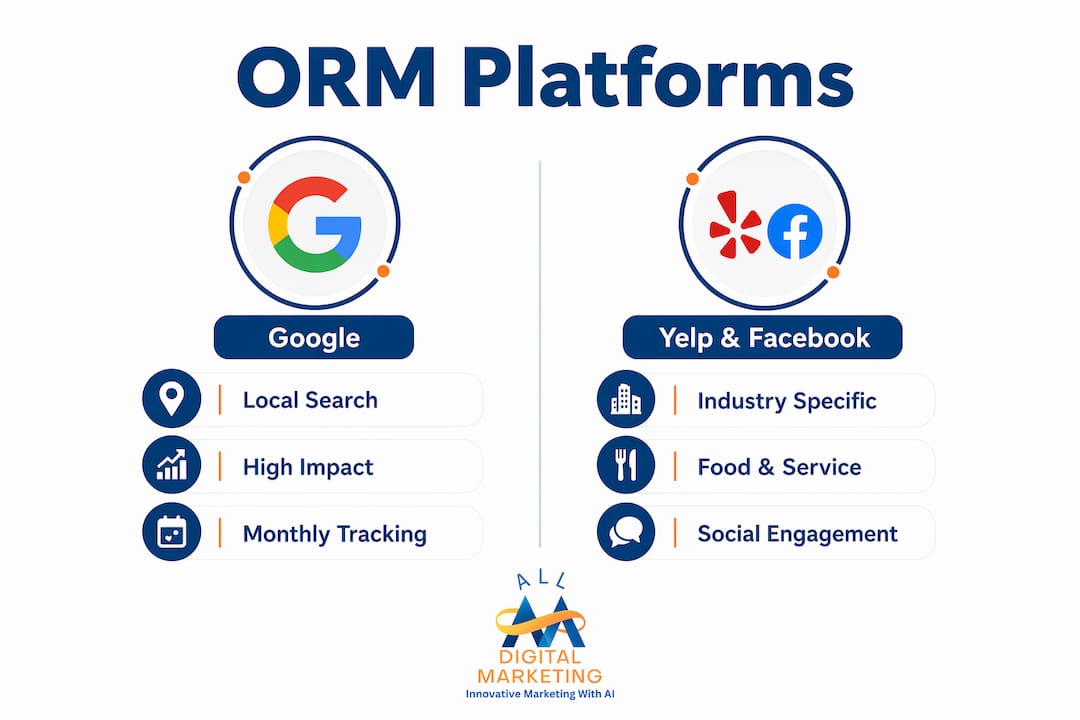
Google is the most impactful platform for local business reputation in 2026. Managing reputation on Google produces measurable improvements in SMB performance and client acquisition. When someone searches for a plumber, a dentist, or a marketing agency near them, Google's local pack is the first result they see. Your star rating, review count, and response behavior are all visible before they click your website.

Yelp carries significant weight in industries like food service, home improvement, and professional services. Facebook reviews matter for businesses with strong community followings, particularly in retail and personal services. The benefits of managing your Google My Business profile extend beyond reputation. They affect your local search ranking directly.
| Platform | Primary audience | Best for | Review visibility |
|---|---|---|---|
| All local searchers | Every SMB category | Highest, appears in search results | |
| Yelp | Service and dining seekers | Restaurants, contractors, health | High, dedicated review platform |
| Community and social users | Retail, personal services, events | Medium, visible to followers and searchers | |
| Industry sites | Niche buyers | Legal, medical, home services | Varies by industry |
The platforms you prioritize should match where your customers already search. A dental practice benefits more from Google and Healthgrades than from Facebook. A restaurant needs Google and Yelp above all else. Spreading your effort equally across every platform is less effective than going deep on the two or three that your customers actually use.
- Claim and verify your Google Business Profile first
- Respond to every review on Google within 48 hours
- Monitor Yelp even if you do not actively solicit reviews there
- Check industry-specific directories relevant to your business category
What are the common misconceptions about ORM?
The biggest misconception about ORM is that it means hiding or suppressing negative reviews. That is not what reputation management does, and attempting it usually backfires. The real goal is to create enough positive digital signals that your overall profile reflects the quality of your actual service.
A second misconception is that a scripted response is better than no response. Customers detect canned, impersonal replies and those responses damage trust rather than rebuild it. A one-sentence generic reply like "We're sorry for your experience, please contact us" signals that no one actually read the review. Empathetic, specific responses that address the actual complaint do the opposite. They show future readers that you take feedback seriously.
A third myth is that ORM is only necessary when something goes wrong. Waiting for a crisis to start managing your reputation is like waiting for a leak to start maintaining your roof. Successful ORM requires active listening and turning customer feedback into real operational improvements. That is a continuous process, not a one-time fix.
- ORM is not about suppressing negative reviews. It is about building a stronger overall profile.
- Scripted responses hurt trust. Specific, empathetic replies build it.
- Reputation management is ongoing, not reactive.
- Negative feedback is data. Use it to improve your service.
Pro Tip: When you respond to a negative review, address the specific issue mentioned, not a generic version of it. Mention what you changed or what you will do differently. That specificity is what future readers remember.
How can SMBs implement effective ORM?
Effective ORM for SMBs comes down to five repeatable practices. Each one is practical and does not require a large budget or a dedicated team.
-
Ask satisfied customers for reviews. 68% of customers would write a review if asked. Most businesses never ask. A simple follow-up text or email after a completed service is enough. Tools like Birdeye, Podium, and NiceJob automate this process and send review requests at the right moment.
-
Respond to every review, positive and negative. Responding to positive reviews builds goodwill and shows appreciation. Responding to negative reviews shows accountability. Both behaviors signal to Google that your business is active and engaged, which supports your local search ranking.
-
Close the loop after a complaint. Following up privately after resolving a negative review can turn a dissatisfied customer into a loyal advocate. It also creates an opportunity for them to update their review. This "closing the loop" strategy is one of the most underused tools in ORM.
-
Monitor your reputation consistently. Set up Google Alerts for your business name. Use a review aggregation tool to see all your reviews in one place. Check your profiles on Google, Yelp, and Facebook at least once a week. Catching a problem early is far easier than managing a pile of unaddressed complaints.
-
Integrate ORM into your broader marketing. Your reputation is part of your overall digital reputation strategy, not a separate task. Positive reviews can be featured in email campaigns, on your website, and in social media content. A strong review profile reinforces every other marketing channel you use.
Pro Tip: After resolving a complaint by phone or email, send a brief follow-up message thanking the customer and letting them know their feedback led to a real change. That personal touch is what converts a one-star reviewer into a five-star advocate.
Key Takeaways
Managing your online reputation is the single most direct way an SMB can build consumer trust, attract more clients, and protect its revenue from the impact of unmanaged negative feedback.
| Point | Details |
|---|---|
| Reviews drive purchasing decisions | 96% of consumers check reviews before buying, making your review profile your digital front door. |
| Positive reviews increase revenue | A one-star Yelp increase drives 5–9% revenue growth; strong reputations justify premium pricing. |
| Google is the top priority platform | Local search results on Google are the first thing prospects see, making it the highest-impact platform for SMBs. |
| Scripted responses backfire | Specific, empathetic replies build trust; generic canned responses signal indifference and damage credibility. |
| ORM is a continuous practice | Asking for reviews, responding promptly, and closing the loop after complaints are repeatable habits, not one-time fixes. |
Why I think most SMBs are treating ORM as an afterthought
I have worked with enough small business owners to recognize a pattern. Most of them know their online reputation matters. Very few treat it as a core business function. They check their Google rating occasionally, respond to a bad review when it stings, and assume the rest takes care of itself. That approach is how a four-star business slowly becomes a three-star business without anyone noticing until revenue drops.
The research backs this up. SMBs with higher internet self-efficacy manage their reputations more effectively and see better business performance as a result. That is not a coincidence. Owners who understand the tools and platforms available to them engage with ORM consistently. Those who feel intimidated by the technology avoid it. The gap between those two groups shows up in their review counts, their ratings, and their revenue.
What I find most underappreciated is that ORM is not a marketing task. It is a strategic business resource, as integral to your planning as pricing or staffing. The businesses that treat it that way build genuine customer loyalty. They also create a feedback loop where good service generates good reviews, which attracts more clients, which gives you more opportunities to deliver good service. That cycle compounds over time in a way that paid advertising simply cannot replicate.
My honest advice: assign one person in your business to own ORM. Give them a checklist, a tool, and a weekly time block. You do not need a large agency to get this right. You need consistency.
— Diane
How Digitalmarketingall helps SMBs build a stronger review profile
Building a consistent review profile takes a system, not just good intentions. Digitalmarketingall offers review generation and management services designed specifically for SMBs that want to attract more clients through a stronger online reputation. The service covers automated review requests, response management, and monitoring across Google, Yelp, and other key platforms. If your Yelp presence needs dedicated attention, the Yelp Help program provides targeted support for managing and improving your Yelp rating. Both services are built around the same principle: a well-managed reputation is the most cost-effective client acquisition tool available to a small business.
FAQ
What is online reputation management for small businesses?
Online reputation management (ORM) is the practice of monitoring and improving what consumers see about your business on platforms like Google, Yelp, and Facebook. It includes responding to reviews, soliciting new ones, and using feedback to improve your service.
How does online reputation affect sales?
Positive reviews increase consumer trust by 74%, and a one-star increase on Yelp can boost revenue by 5–9%. A strong reputation directly raises conversion rates and supports premium pricing.
Which platform should SMBs focus on first for reputation management?
Google is the highest-priority platform for most SMBs because it controls local search visibility. Claim and verify your Google Business Profile before focusing on Yelp or Facebook.
How often should a business respond to reviews?
Respond to every review within 48 hours. Timely, specific responses signal to both customers and Google that your business is active and accountable.
Is it possible to remove negative reviews?
You cannot remove legitimate negative reviews on Google or Yelp. The effective approach is to respond empathetically, resolve the issue, and follow up privately to give the customer a reason to update their review.