

Finding local customers online can feel confusing when search results seem unpredictable or irrelevant. As search engines become more sophisticated, traditional global SEO tactics often fall short for American business owners hoping to connect with nearby clients. Understanding the power of local search optimization and the role of AI can provide a clear advantage, helping your business appear where it matters most and building trust in your own community.
Table of Contents
Key Takeaways
| Point | Details |
| Local Search Requires Tailored Strategies | Businesses must implement specific local SEO strategies that prioritize geographic relevance and local citations. |
| AI and Mobile Transform Discoverability | AI-driven personalization and mobile technologies are crucial for enhancing local search interaction. |
| Ongoing Optimization is Essential | Consistent monitoring and updating of local search listings ensure accuracy and better visibility. |
| Common Errors Can Damage Credibility | Inconsistent information, neglected reviews, and keyword stuffing can negatively impact search rankings. |
Defining Local Search And Common Misconceptions
Local search represents a specialized approach to internet searching that focuses specifically on finding businesses, services, and information within a precise geographic region. Unlike traditional web searches that span global results, local search narrows results) to location-specific queries that match user proximity and intent.
At its core, local search operates through sophisticated algorithms that prioritize geographic relevance. Search engines analyze multiple factors when delivering local results, including:
-
User’s current physical location
-
Business proximity
-
Relevance of search terms
-
Local business listings and citations
-
User review signals and engagement metrics
Many business owners misunderstand how local search truly functions. Common misconceptions about local search include believing that:
-
Global SEO strategies work identically for local searches
-
Only physical storefront businesses benefit from local optimization
-
Local search is limited to map results or directions
-
All geographic searches produce identical results
In reality, local search optimization requires specialized strategies targeting specific location-based keywords, building local citations, and creating geographically relevant content. Businesses must understand that local search represents a nuanced digital marketing approach demanding precise, targeted efforts.
Here’s a summary of the most influential factors in local search performance and their business impacts:
| Factor | Role in Local Search | Impact on Business |
| User Location | Filters nearby results | Increases local visibility |
| Business Proximity | Ranks closer businesses higher | Drives foot traffic |
| Local Citations | Verifies business presence | Builds local authority |
| User Reviews | Signals trust and relevance | Attracts more customers |
| Search Intent Matching | Aligns results with needs | Boosts qualified leads |
Pro tip: Invest time in claiming and optimizing your Google Business Profile to significantly improve your local search visibility and attract nearby customers.
Types Of Local Search And Key Channels
Local search has dramatically evolved beyond traditional directory listings, emerging as a complex digital ecosystem with multiple interconnected channels. Local search channels now span digital platforms that offer businesses unprecedented opportunities to connect with nearby customers.
The primary types of local search can be categorized into several key channels:
-
Organic Search Results: Location-based queries on search engines like Google
-
Map-Based Searches: Platforms such as Google Maps and Apple Maps
-
Directory Listings: Websites like Yelp, TripAdvisor, and industry-specific review sites
-
Social Media Local Search: Targeting features on platforms like Facebook and Instagram
-
Voice Search: Queries through smart assistants and mobile devices
Search Intent plays a critical role in local search, with users typically seeking one of three primary objectives:
-
Discovery of local businesses and services
-
Obtaining contact and location information
-
Reading reviews and comparing local options
Local search engine optimization requires businesses to understand these nuanced channels and develop targeted strategies for maximum visibility. Each platform demands a unique approach, from optimizing Google Business Profiles to managing social media location tags.

The table below compares the main local search channels for businesses:
| Channel | Best Use Case | Typical User Action |
| Organic Search | Service or product queries | Finds business websites |
| Map-Based Platforms | Navigation and directions | Visits in-person |
| Directory Listings | Review and selection | Compares ratings |
| Social Media Search | Real-time engagement | Checks updates/offers |
| Voice Search | Hands-free quick answers | Calls or navigates |
Pro tip: Develop a multichannel local search strategy that consistently presents accurate business information across different platforms to maximize your digital visibility.
How AI And Mobile Reshape Local Discovery
Artificial intelligence and mobile technologies are fundamentally transforming how consumers discover and interact with local businesses. AI algorithms analyze complex data points to deliver unprecedented personalization in local search experiences, creating a more intuitive and contextually aware discovery ecosystem.
The key technological innovations reshaping local discovery include:
-
Personalized Recommendations: AI-driven systems that predict user preferences
-
Real-Time Location Services: GPS-enabled precise targeting
-
Voice Search Integration: Natural language processing for conversational queries
-
Augmented Reality Interfaces: Visual search and location information overlays
-
Predictive Local Suggestions: Anticipating user needs before explicit searches
Mobile devices now serve as powerful discovery platforms, enabling instant, location-aware interactions. Advanced AI technologies transform local search methods by bridging digital and physical experiences through:
-
Instant geolocation matching
-
Context-aware recommendation engines
-
Image and voice recognition technologies
-
Seamless online-to-offline conversion tracking
Businesses must adapt to these technological shifts by developing sophisticated, AI-integrated local search strategies that prioritize user experience, data privacy, and hyper-local relevance.
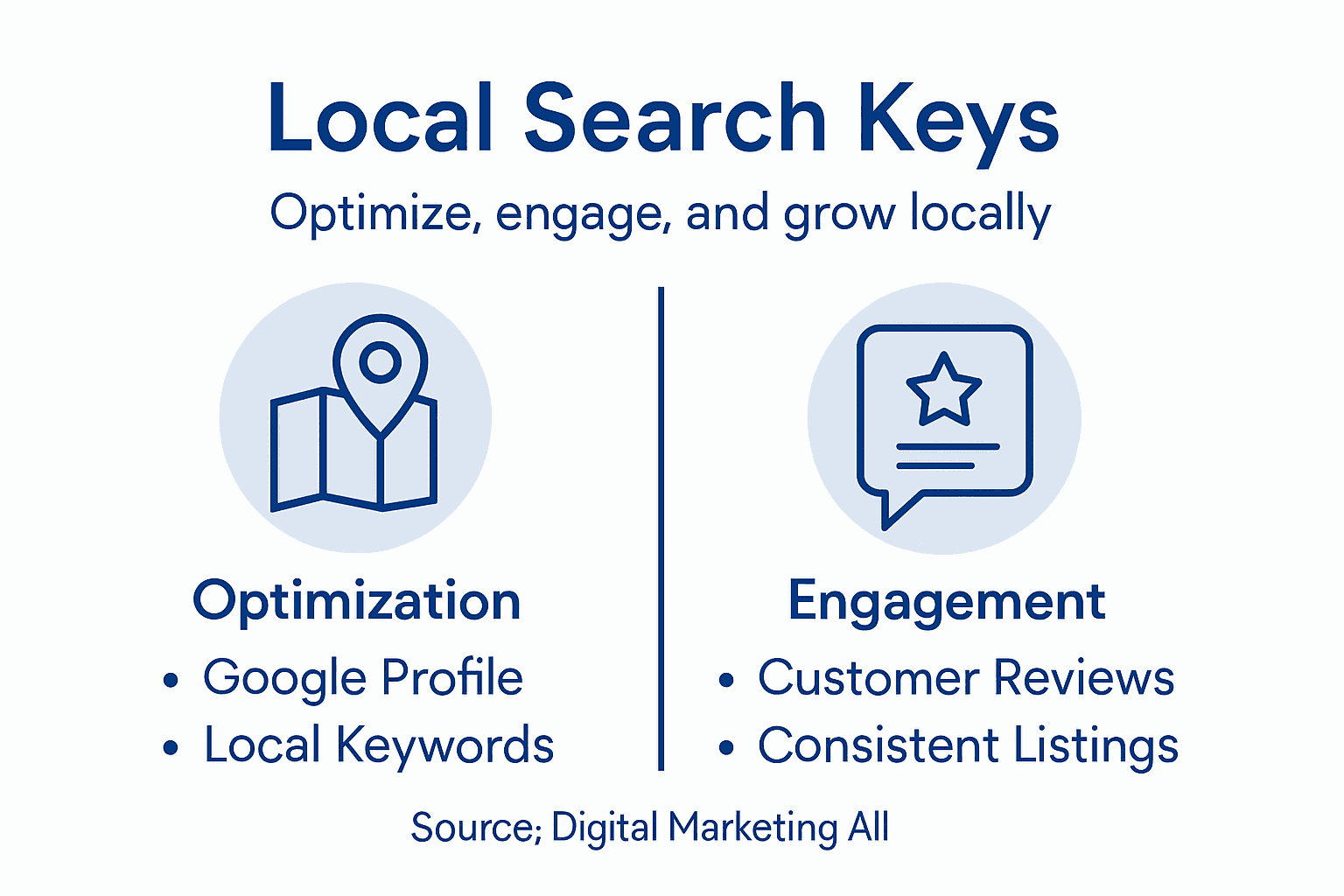
Pro tip: Optimize your business’s digital presence with structured data and AI-friendly metadata to enhance discoverability across emerging mobile and AI search platforms.
Optimizing Google And AI For Local Prominence
Local search optimization has become increasingly complex with the rise of AI-driven search technologies. Generative Engine Optimization strategies are transforming how businesses approach digital visibility, requiring a sophisticated approach to content and search engine positioning.
Key strategies for dominating Google and AI-powered local search include:
-
Precise Keyword Targeting: Align content with specific local search intents
-
Structured Data Markup: Enhance machine readability and context
-
Consistent NAP Information: Maintain accurate Name, Address, Phone details
-
Local Content Relevance: Create hyper-local, intent-driven content
-
Mobile-First Optimization: Ensure seamless mobile search experiences
Businesses must focus on multiple optimization dimensions to succeed in the evolving search landscape. SEO techniques now require adaptive strategies that go beyond traditional keyword optimization, emphasizing:
-
User intent understanding
-
Contextual content creation
-
Technical search engine compatibility
-
Local authority building
AI-powered search demands a holistic approach that combines technical optimization, content strategy, and continuous adaptation to emerging search technologies.
Pro tip: Develop a dynamic local SEO strategy that uses AI tools to continuously analyze and refine your digital presence across multiple search platforms.
Costs, Risks, And Avoidable Local Search Errors
Local search strategies involve complex technological and cognitive challenges that can significantly impact business visibility and customer trust. AI-powered search introduces critical decision-making risks that businesses must carefully navigate to maintain their competitive edge.
Common local search errors that businesses frequently encounter include:
-
Incomplete Business Information: Inconsistent or outdated listing details
-
Neglected Review Management: Ignoring or failing to respond to customer feedback
-
Poor Mobile Optimization: Websites that don’t function well on mobile devices
-
Keyword Stuffing: Overloading content with irrelevant local search terms
-
Duplicate Content: Creating multiple similar location pages
Businesses must understand the potential risks associated with local search optimization. Algorithmic decision-making introduces significant errors that can impact search visibility, including:
-
Misrepresentation of business relevance
-
Unfair ranking manipulations
-
Privacy and data representation concerns
-
Potential algorithmic bias
Successful local search strategies require continuous monitoring, transparent practices, and a proactive approach to addressing potential technological and representational challenges.
Pro tip: Conduct monthly audits of your local search listings to ensure accuracy, consistency, and optimal performance across all digital platforms.
Unlock Your Local Business Potential with Intelligent Digital Marketing
Local search is more than just appearing on a map or listing your address online. As the article “Why Focus On Local Search For Business Success” highlights, mastering precise keyword targeting, business proximity awareness, and AI-driven optimization is critical to standing out in a crowded local market. If you struggle with inconsistent business information, poor mobile experiences, or ineffective review management these challenges can silently drain your local visibility and customer trust.
At Digital Marketing All, we specialize in transforming these common pitfalls into powerful advantages through innovative strategies like Google My Business optimization, AI-powered search enhancement, and reputation management.

Take control of your local search presence today by partnering with experts who understand how to leverage local citations, AI personalized recommendations, and voice search integration to drive foot traffic and qualified leads. Visit our site now to discover tailored solutions that elevate your business above competitors. Don’t wait as the digital landscape evolves rapidly — ensure your local prominence grows with it by starting here Digital Marketing All now.
Frequently Asked Questions
What is local search, and how does it differ from traditional search?
Local search focuses on finding businesses and services within a specific geographic area, unlike traditional search that provides global results. It prioritizes geographic relevance based on the user’s location and intent.
What are the main factors influencing local search performance?
Key factors include the user’s current location, business proximity, local citations, user reviews, and how well search intent aligns with the search results.
How can businesses optimize their presence in local search results?
Businesses can optimize for local search by claiming their Google Business Profile, using specific location-based keywords, maintaining consistent contact information, and earning positive user reviews.
Why is mobile optimization important for local search?
Mobile optimization is critical because consumers increasingly use mobile devices for local searches. Ensuring a seamless mobile experience leads to higher engagement and better visibility in search results.