

TL;DR:
- Effective video marketing requires a strategic approach aligned with specific business goals.
- Short-form videos build awareness while long-form content drives conversions.
- Authentic, raw videos outperform highly polished content in building trust and engagement.
Most business owners assume that posting more videos will automatically bring in more customers. It won't. More video content does not always create better results if it lacks strategy. Video content marketing is the practice of using video to attract, engage, and convert your target audience into paying customers. It's not about flooding every platform with clips. It's about making the right video, for the right audience, at the right moment. This guide will show you exactly what video content marketing is, which formats work best, how it drives real growth, and how to build a system that produces consistent results for your business.
Table of Contents
- What is video content marketing?
- Major types of video content and where they thrive
- How video content marketing drives business growth
- Key strategies for successful video content marketing
- Why most video marketing advice misses what actually works
- Want expert help getting results from video content marketing?
- Frequently asked questions
Key Takeaways
| Point | Details |
|---|---|
| Strategy beats volume | Publishing more videos is useless without clear goals and a plan. |
| Short form grabs, long form converts | Use quick videos for attention but rely on deeper content for sales. |
| Authenticity wins trust | Raw, user-generated content often outperforms polished, scripted videos. |
| Consistency trumps trends | Long-term systems and regular posting outperform chasing the latest algorithm. |
What is video content marketing?
Now that you know quantity isn't everything, let's clarify what video content marketing truly means for your business.
Video content marketing is a strategy where businesses use video to communicate value, build relationships, and move potential customers toward a buying decision. It's not just running video ads. It includes educational content, product demonstrations, customer stories, behind-the-scenes footage, and live streams. Each piece serves a specific purpose within your broader marketing plan.
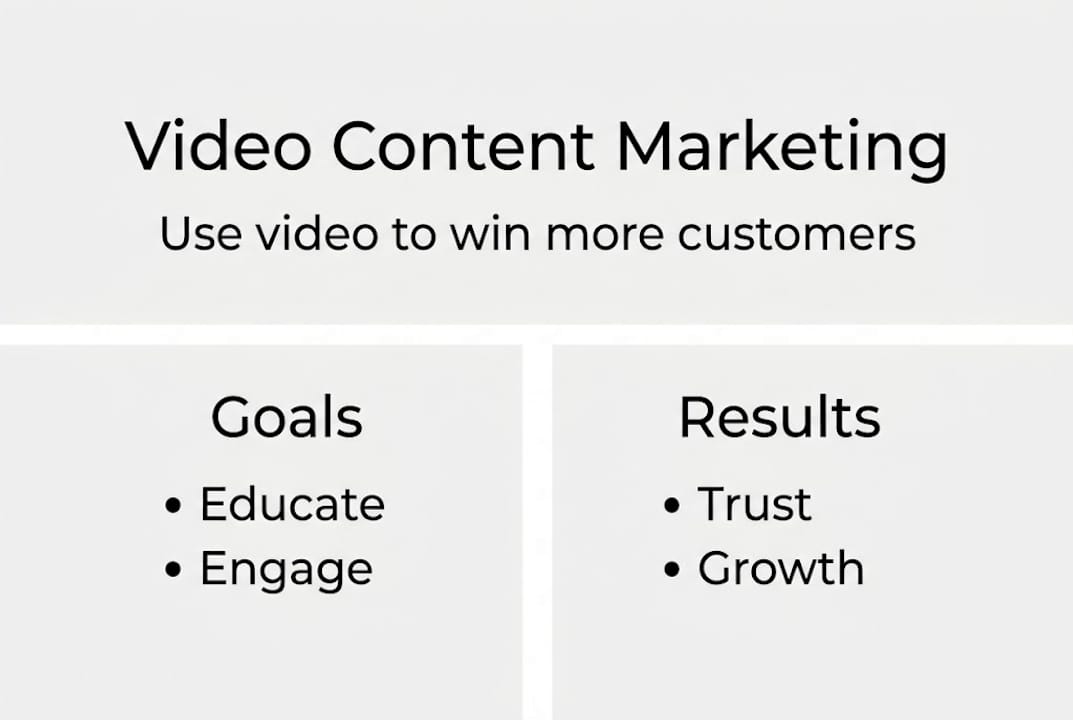
The video content marketing role in a business's growth strategy has expanded significantly. Video now touches every stage of the customer journey, from the moment someone first discovers your brand to the point they decide to buy and recommend you to others.
Three core components define effective video content marketing:
- Strategy: Knowing what goals each video serves before you hit record
- Content types: Choosing the right format for your message and audience
- Distribution channels: Placing your videos where your customers already spend time
Here's a quick look at how different video goals map to business outcomes:
| Video goal | Business outcome |
|---|---|
| Educate your audience | Builds authority and trust |
| Showcase your product | Increases purchase confidence |
| Share customer stories | Reduces buying hesitation |
| Announce promotions | Drives short-term conversions |
| Answer common questions | Improves customer retention |
One critical insight from B2B video marketing research is that video requires an ecosystem, not stand-alone videos. That means your videos should connect to your blog posts, email campaigns, social media, and website. They should work together, not in isolation.
Knowing which must-have video types fit your business is the next step. And understanding the SEO benefits of video will help you see why this investment pays off across your entire digital presence.
Pro Tip: Before creating any video, write down one specific business goal it supports. If you can't name the goal, don't make the video yet.
Major types of video content and where they thrive
Having defined what video content marketing is, it's crucial to understand the formats you can choose and where each shines.
Not all videos are created equal. A 60-second TikTok and a 20-minute YouTube tutorial serve completely different purposes. Choosing the wrong format for your goal is one of the most common and costly mistakes business owners make.
Here are the primary video formats and where they perform best:
| Video type | Best platform | Best for |
|---|---|---|
| Explainer videos | YouTube, website | Educating new audiences |
| Testimonials | Website, Facebook | Building trust and credibility |
| Live video | Instagram, Facebook | Real-time engagement |
| User-generated content (UGC) | TikTok, Instagram | Authentic social proof |
| How-to tutorials | YouTube, Pinterest | Demonstrating expertise |
| Short-form clips | Reels, TikTok, Shorts | Brand awareness and reach |
According to B2B video marketing data, UGC outperforms branded content, and short videos under 60 seconds are best for capturing attention on social platforms. B2B audiences lean toward demos and testimonials when evaluating purchasing decisions.
Choose your format based on where your customer is in their journey:
- Use short-form clips when you want to reach new audiences fast
- Use testimonials when prospects are comparing you to competitors
- Use how-to videos when customers need help getting value from your product
- Use live video when you want to build community and answer questions in real time
- Use explainers when your product or service needs context before someone will buy
Short-form video builds engagement and brand recognition. Long-form video converts. Use both intentionally.
The tips for successful video creation that apply across all formats include keeping your message focused, adding captions for silent viewing, and always ending with a clear next step. Explore the full list of essential video types to find what fits your business model best.
How video content marketing drives business growth
Now that you know the main types and formats, let's map out exactly how video content translates into measurable growth.

Video isn't just a trend. It's a proven growth driver when used correctly. Here's how it creates real, trackable results for small and medium-sized businesses.
1. It improves your search rankings. Search engines favor pages where visitors spend more time. Videos keep people on your page longer, which signals quality to Google. Pairing video content and SEO is one of the most effective ways to improve your organic visibility without increasing your ad budget.
2. It builds brand trust. Customers buy from businesses they trust. Video lets you show your team, your process, and your values in ways that text simply can't match. Testimonials and behind-the-scenes content humanize your brand.
3. It increases engagement. Visual content gets shared more than any other format. When customers share your videos, you reach new audiences without paying for ads.
4. It drives direct conversions. A well-placed call to action inside a video can move a viewer directly to a purchase, a booking, or a form submission. Boosting sales with video is measurable and repeatable.
5. It supports long-term growth. Video content compounds over time. A tutorial posted today can generate leads 18 months from now.
Here's how video performance typically maps to business metrics:
| Video metric | Business impact |
|---|---|
| Watch time | Indicates content quality and audience fit |
| Click-through rate | Measures call-to-action effectiveness |
| Shares and saves | Signals content value and organic reach |
| Comments | Shows audience engagement and trust |
| Conversion rate | Directly ties video to revenue |
Importantly, video marketing alone is insufficient without fitting into a broader content ecosystem. That's why businesses that integrate video and podcasting for growth tend to see stronger compounding results over time.
Key strategies for successful video content marketing
To truly benefit, you need more than great video ideas. You need systems. Here's how to get practical and strategic.
Success comes from systems like goals, calendars, and repurposing, not sporadic posting. Business owners who treat video as a series of one-off projects rarely see consistent results. Those who build repeatable processes do.
Here are five steps to build your video marketing strategy:
- Set a specific goal for every video. Is it awareness, trust, or conversion? Each video should serve one primary purpose.
- Build a content calendar. Plan your videos at least four weeks in advance. Consistency matters more than frequency.
- Repurpose every video across platforms. A long YouTube tutorial becomes a short Instagram Reel, a blog post, and an email newsletter. One video, multiple touchpoints.
- Track performance weekly. Review watch time, clicks, and conversions. Cut what doesn't work. Double down on what does.
- Align video topics with customer questions. Your best video ideas come from the questions your customers already ask you.
More volume does not equal more results without strategy. Businesses that chase posting frequency without a plan burn out quickly and see little return.
Avoid these common pitfalls:
- Posting without a defined audience in mind
- Skipping captions and accessibility features
- Ignoring analytics and never adjusting your approach
- Creating content for every platform without adapting the format
Explore short-form video strategies that work specifically for small businesses, and learn how to boost views with video through smart formatting and posting habits. If lead generation is your priority, see how to unleash leads with video using short-form content as your primary driver.
Pro Tip: Repurposing is not lazy. It's smart. Every long video you create should become at least three shorter pieces of content.
Why most video marketing advice misses what actually works
Now that you have a framework for success, here's what most business owners overlook, and our take on what actually drives results.
Most video marketing advice focuses on production quality, posting frequency, or chasing whatever platform is trending this month. That advice misses the point entirely.
We've seen businesses spend thousands on cinematic brand videos that generate almost no engagement, while a simple, honest 90-second phone video from a real customer drives dozens of inquiries. Why? Because raw and live content outperforms AI-generated or over-polished content when it comes to building trust. Audiences in 2026 are skeptical of perfection. They respond to authenticity.
The business owners who see lasting results from video aren't the ones posting every day. They're the ones who know exactly who they're talking to, what problem they're solving, and how each video connects to a real business outcome. They treat short-form video as a growth tool with a clear purpose, not a vanity metric.
Chasing volume leads to burnout and mediocre content. Strategy, consistency, and genuine connection with your audience will always outperform a high production budget without direction.
Want expert help getting results from video content marketing?
Ready to turn strategy into results? Here's how our team can accelerate your video marketing success.
Building a video content marketing system takes time, testing, and expertise. If you're ready to move faster and avoid costly trial and error, our team at Digital Marketing All can help you build a strategy that connects video to real business growth.

We help small and medium-sized businesses increase their online visibility through proven content marketing strategies. Whether you want to get more reviews that reinforce your video credibility, improve your Yelp presence to reach more local customers, or optimize your website to convert video traffic into leads, we have the tools and experience to make it happen. Contact us today and let's build your video marketing strategy together.
Frequently asked questions
Why isn't posting more videos bringing me more customers?
Volume alone doesn't guarantee growth. Successful video marketing depends on strategic planning, consistency, and alignment with your specific business goals.
What type of video works best for small businesses?
Short-form videos are excellent for gaining attention, while testimonials and user-generated content build the most trust with potential customers.
How do I create a sustainable video marketing strategy?
Set clear goals, use a content calendar, and repurpose your videos across platforms. Systems and consistency create results, not sporadic posting.
Is it better to use highly produced or raw videos?
Raw and authentic videos tend to build more trust with audiences than highly polished, AI-generated content, especially in 2026.
Recommended
- Why Short-Form Video Is Your Secret Weapon for Business Growth in 2025
- Leverage video content for SEO success in 2026
- Skyrocket Your Business with Video Content Marketing in 2025
- Unlock the Magic of Video Marketing—Boost Sales Fast
- Content marketing ideas for eCommerce: boost engagement 2026 – Lind Creative