

Most local business owners think content marketing means churning out endless blog posts nobody reads. That's not just wrong, it's expensive. Real content marketing builds trust and drives leads by delivering exactly what your audience needs, when they need it. In 2026, small businesses using strategic content see measurable growth in visibility and revenue. This guide cuts through the confusion, showing you what content marketing actually is, why it works, and how to implement it effectively without wasting time or money.
Table of Contents
- What Is Content Marketing? Defining The Foundation
- Why Content Marketing Works: The Role Of Audience And SEO
- How AI And Content Production Trends Shape Your Strategy In 2026
- Putting It All Together: Crafting Your 2026 Content Marketing Strategy
- Expand Your Content Marketing Reach With Expert Local Digital Marketing Services
Key takeaways
| Point | Details |
|---|---|
| Value over volume | Quality content tailored to your audience consistently outperforms high-volume generic posts. |
| Research drives results | Deep audience understanding combined with SEO delivers measurable leads and revenue growth. |
| AI optimizes, doesn't inflate | AI tools streamline strategy and workflows but don't increase content production volume. |
| Outsourcing scales smart | Nearly half of all content is produced externally to ensure consistent quality without overwhelming teams. |
| Trust builds conversions | Consistent valuable content establishes authority and loyalty, turning browsers into buyers. |
What is content marketing? Defining the foundation
Content marketing isn't about promoting your services directly. Instead, it focuses on delivering valuable and relevant information that attracts and retains a clearly defined audience. The goal is building relationships that drive measurable business outcomes over time.
This approach works because it builds trust, authority, and loyalty, all essential for local business growth. While traditional advertising interrupts, content marketing invites people in by solving their problems first. The shift matters more than ever in 2026, with 71% of marketers recognizing content's growing importance.
Consumers overwhelmingly prefer helpful articles and educational content over ads. They research before buying, seeking businesses that demonstrate expertise without pushy sales tactics. When you consistently provide value, you position yourself as the obvious choice when they're ready to purchase.
Effective content marketing for local businesses includes:
- Educational blog posts answering common customer questions
- How-to videos demonstrating your expertise and process
- Social media content sharing tips and industry insights
- Email newsletters keeping your audience informed and engaged
- Case studies showing real results for real customers
The beauty of this strategy is that it works while you sleep. Published content continues attracting and educating prospects months or years after creation. Compare that to paid ads that stop working the moment you stop paying. Smart local businesses combine both approaches, using content to build long-term authority while micro-influencer marketing amplifies reach.
Why content marketing works: The role of audience and SEO
Success in content marketing hinges on two critical elements: knowing your audience deeply and making your content discoverable through SEO. Nearly half of successful businesses point to deep audience research and SEO as their secret weapons.
Understanding your audience means creating detailed buyer personas through research, surveys, and customer interviews. You need to know their pain points, questions, goals, and preferred content formats. Generic content aimed at everyone reaches no one effectively.
SEO ensures your valuable content actually reaches people searching for solutions you provide. Without optimization, even brilliant content sits invisible on page five of search results. Simplified SEO strategies focus on relevant keywords, quality backlinks, and technical site health to boost visibility.

The payoff is substantial. 58% of B2B marketers draw a direct line from content efforts to increased sales and revenue. Focused content aligned with audience needs builds trust and authority, naturally driving leads and conversions.
| Metric | Strong Audience Research + SEO | Weak Research/SEO |
|---|---|---|
| Conversion Rate | 4.2% average | 1.8% average |
| Lead Quality Score | 8.1/10 | 5.3/10 |
| Organic Traffic Growth | 127% year over year | 34% year over year |
| Cost Per Lead | $42 | $89 |
Consistent SEO and audience focus provide measurable uplift across every metric that matters. Businesses investing in both see dramatically better results than those treating content as an afterthought.
Pro Tip: Avoid scattered content by anchoring all efforts on one primary goal, either brand awareness or conversions. Trying to accomplish everything dilutes impact and confuses your audience about what action to take.
This focused approach helps customers with limited advertising budgets compete effectively against bigger competitors. Quality beats quantity when you target precisely. Audience segmentation strategies help refine targeting further, ensuring every piece of content speaks directly to a specific segment's needs.
How AI and content production trends shape your strategy in 2026
AI tools promise to revolutionize content marketing, but the reality is more nuanced than hype suggests. AI isn't increasing content production volume, with median companies producing 11 to 20 blogs and 51 to 100 social posts per quarter regardless of AI use.
What AI actually does is optimize strategy and workflows. It helps with keyword research, content ideation, performance analysis, and personalization at scale. The bottleneck isn't writing speed, it's idea generation, approvals, and strategic alignment. AI can't solve organizational challenges or replace human creativity and judgment.
Quality and relevance remain the primary success factors. Flooding channels with mediocre AI-generated content damages your brand more than publishing less frequently with higher quality. Your audience can tell the difference, and search engines increasingly penalize thin, generic content.
Outsourcing content is a strategic move many growing businesses make. Nearly half of all content is produced externally, with outsourcing growing as revenue increases. External partners provide capacity insurance, ensuring steady content flow without overwhelming your internal team.
Consider these outsourcing benefits:
- Access to specialized expertise in writing, video, design, and SEO
- Consistent production without hiring full-time staff
- Fresh perspectives from professionals who study content trends
- Scalability to increase or decrease output based on business needs
- Time savings allowing you to focus on core business operations
Pro Tip: Repurpose existing content into videos, social posts, infographics, or webinars to maximize reach and return on investment without creating everything from scratch.
Different formats reach different audience segments. Some people prefer reading detailed articles, others watch quick videos, and many consume information through social media snippets. Short-form content benefits include higher engagement rates and easier sharing, making it perfect for awareness building.
The key is creating a content ecosystem where pieces support and amplify each other. A comprehensive blog post becomes a video script, social media series, email newsletter, and podcast episode. This approach multiplies impact while controlling production costs and time investment.
Putting it all together: Crafting your 2026 content marketing strategy
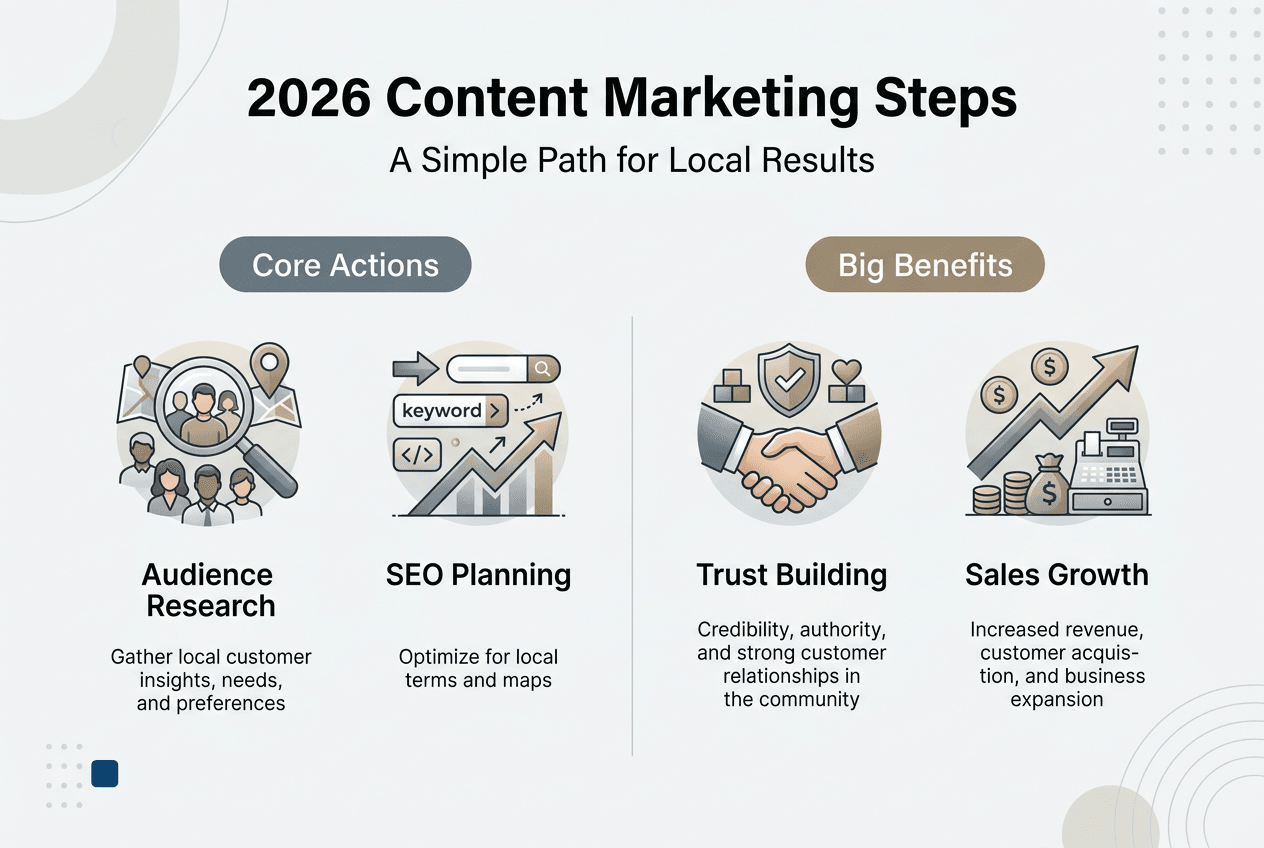
Building an effective content marketing strategy starts with clarity about your primary goal. Are you focused on brand awareness, reaching new audiences and establishing authority? Or are you prioritizing conversions, turning existing awareness into leads and sales? Both matter, but your content approach differs significantly.
Develop detailed buyer personas based on actual research, not assumptions. Interview customers, analyze support tickets, study competitor audiences, and survey your email list. Understand their challenges, questions, preferred content formats, and decision-making process. This research directs your content topics, tone, and distribution channels.
Implement SEO best practices to improve visibility. Research keywords your local audience actually searches, optimize on-page elements like titles and headers, build quality backlinks, and ensure technical site health. Local businesses should emphasize location-based keywords and optimize Google Business Profile integration.
Plan content formats strategically based on audience preferences and business goals. Blogs establish authority and drive organic search traffic. Videos build personal connection and explain complex topics quickly. Social posts maintain consistent presence and encourage sharing. Webinars generate qualified leads and demonstrate expertise live.
| Strategy Focus | Primary Goal | Key Tactics | Success Metrics | Content Examples |
|---|---|---|---|---|
| Brand Awareness | Reach and recognition | SEO blogs, social media, guest posts, PR | Traffic, shares, mentions, followers | Educational guides, industry insights, trend analysis |
| Conversion Focus | Leads and sales | Landing pages, email sequences, case studies | Conversion rate, lead quality, revenue | Product comparisons, customer stories, free tools |
Follow this step-by-step plan to create, publish, and promote content consistently:
- Conduct quarterly audience research to stay current with evolving needs and preferences.
- Create a content calendar mapping topics to business goals and seasonal opportunities.
- Produce content in batches to maintain consistency without daily pressure.
- Optimize every piece for SEO before publishing to maximize organic discovery.
- Distribute across owned channels like your website, email list, and social profiles.
- Promote through paid amplification, partnerships, and community engagement.
- Measure performance against defined KPIs and adjust strategy based on data.
- Repurpose top performers into new formats to extend reach and lifespan.
Pro Tip: Regularly audit your content library to identify repurposing opportunities, update outdated information, and retire underperforming pieces that dilute your site's quality.
Content marketing builds trust and authority by consistently providing valuable information, establishing your business as a reliable resource. This positions you as the obvious choice in your local market, attracting customers who already trust your expertise before the first conversation.
Consistent quality content compounds over time. Each piece adds to your authority, improves search rankings, and provides another entry point for potential customers. Applying these steps systematically drives leads and builds loyal customer relationships that fuel long-term growth. Combine content with building brand authority and video content marketing for maximum impact.
Expand your content marketing reach with expert local digital marketing services
Content marketing delivers powerful results, but combining it with specialized local digital tactics amplifies impact dramatically. Strategic geo-fencing local advertising targets customers precisely when they're near your location or competitors, turning content awareness into immediate action.
Your content builds trust, but customer reviews cement it. Review generation and management ensures your reputation reflects the quality you deliver, making prospects more likely to choose you after reading your helpful content. When potential customers research your business after discovering your content, positive reviews provide the social proof that converts interest into action.
Ready to transform your local marketing with expert guidance? Visit our waiting room to explore how we help small and medium businesses dominate their local markets through integrated content, SEO, and reputation strategies that drive measurable growth.
What is content marketing? Frequently asked questions
What types of content are most effective for local businesses?
Blog posts answering common customer questions perform exceptionally well for local SEO and establishing expertise. Video content builds personal connection and explains services visually, making it perfect for service-based businesses. Customer testimonials and case studies provide social proof that converts prospects into buyers. Short-form content on social media maintains consistent visibility and encourages sharing within local communities.
How does SEO interact with content marketing for better results?
SEO makes your valuable content discoverable by people actively searching for solutions you provide. Keyword research identifies topics your audience cares about, ensuring content relevance. On-page optimization helps search engines understand and rank your content appropriately. Quality content naturally attracts backlinks, which boost domain authority and rankings. Together, SEO and content create a virtuous cycle where better content improves rankings, and better rankings drive more traffic to your content.
Can small businesses create effective content marketing on a limited budget?
Absolutely, and often more effectively than larger competitors. Start by repurposing existing customer conversations, FAQs, and support tickets into blog posts and videos. Focus on depth over breadth, creating comprehensive resources on topics where you have genuine expertise. Use free tools for keyword research, content creation, and basic analytics. Consistency matters more than production value, so publish regularly even if you start with simple formats. Outsource strategically to fill gaps without hiring full-time staff.
What role does AI play in content planning and creation?
AI excels at research, ideation, and optimization tasks that previously consumed hours. It analyzes competitor content, identifies content gaps, suggests topics based on search trends, and optimizes headlines for engagement. AI can draft outlines, generate initial drafts for editing, and personalize content for different audience segments. However, it can't replace human creativity, strategic thinking, or authentic voice. Use AI to handle repetitive tasks and accelerate workflows, but maintain human oversight for quality and brand alignment.
How often should I publish content to see real benefits?
Consistency matters more than frequency. Publishing one quality piece weekly outperforms sporadic bursts of daily content followed by silence. Most successful small businesses publish two to four blog posts monthly, supplemented by regular social media updates. The key is maintaining a sustainable schedule you can keep long-term. Search engines and audiences reward reliability, so choose a frequency you can maintain even during busy periods. Quality always trumps quantity, focus on creating genuinely valuable content rather than hitting arbitrary publication quotas.