

Most business owners invest heavily in traditional SEO, expecting guaranteed online success, yet struggle to understand why their rankings don't translate into visibility on AI platforms. The digital landscape has shifted dramatically as over half of consumers now use generative AI to find information, fundamentally changing how potential customers discover local businesses. AI-powered SEO represents the evolution of search optimization, combining artificial intelligence with proven strategies to dominate both traditional search engines and emerging AI platforms. This guide explains what AI-powered SEO means for your business and how to leverage it for measurable growth in 2026.
Table of Contents
- Understanding AI-Powered SEO: What It Is And Why It Matters
- Benefits Of AI-Powered SEO Supported By Data And Research
- AI-Powered SEO Versus Traditional SEO: Key Differences And Considerations
- Implementing AI-Powered SEO For Your Small Or Medium Business
- Boost Your Business With Expert AI-Powered SEO Services
- What Is AI-Powered SEO? FAQs
Key takeaways
| Point | Details |
|---|---|
| Traffic boost | AI-optimized content generates 23-47% more organic traffic than conventional SEO methods |
| Consumer behavior shift | 53% of consumers actively use generative AI tools, reshaping search patterns and discovery |
| Citation advantage | Properly structured content shows a 5.5x increase in citation likelihood across AI platforms |
| Local search divergence | 80% of AI-cited sources don't appear in Google's top 100, requiring new optimization approaches |
Understanding AI-powered SEO: What it is and why it matters
AI-powered SEO integrates artificial intelligence technologies with traditional search optimization practices to enhance visibility across both conventional search engines and AI-driven platforms. Unlike basic keyword targeting, AI analyzes complex search patterns, predicts user intent with remarkable accuracy, and structures content to meet the specific requirements of machine learning algorithms that power modern search experiences.
This approach goes far beyond stuffing keywords into web pages. AI systems evaluate content quality, semantic relationships, topical authority, and structural elements that traditional SEO tools often miss. The technology examines how users interact with search results, what questions they ask AI assistants, and which content formats generate the most engagement and citations.
The urgency for adoption stems from rapidly changing consumer behavior. 53% of consumers in 2025 are experimenting with or regularly using generative AI to find products, services, and information. This massive shift means your potential customers increasingly bypass traditional search results entirely, relying instead on AI recommendations, chatbot responses, and personalized content suggestions.
Key components of AI-powered SEO include:
- AI-driven keyword analysis that identifies intent clusters rather than isolated search terms
- Content structuring optimized for machine readability and semantic understanding
- User intent prediction that anticipates questions before they're asked
- Personalized SEO strategies that adapt to different audience segments and search contexts
- Real-time optimization based on AI platform performance metrics
For small to medium businesses, understanding the AI vs SEO comparison reveals that these approaches complement rather than compete with each other. Traditional SEO establishes your foundation, while AI-powered techniques amplify your reach across emerging platforms where your competitors may not yet have visibility.
Benefits of AI-powered SEO supported by data and research
The measurable impact of AI-powered SEO dramatically outperforms traditional methods across multiple metrics. Research demonstrates that AI-optimized content receives 23-47% more organic traffic from AI referral sources compared to conventionally optimized pages, representing a substantial competitive advantage for businesses that adopt these strategies early.
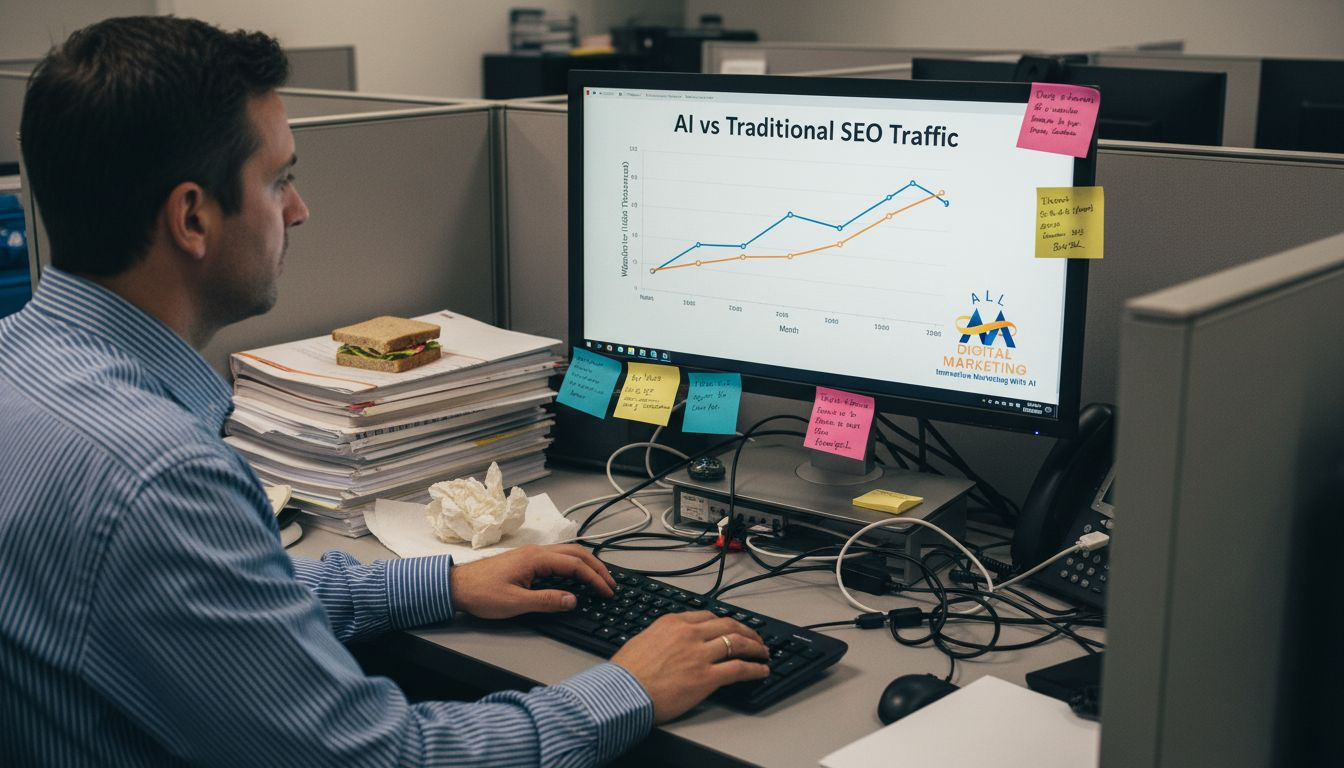
Perhaps more impressive, AI-optimized content shows a 5.5x increase in citation likelihood when AI platforms recommend solutions to users. This citation boost translates directly into authority building, as each mention reinforces your business as a trusted source within your industry or local market.
| Metric | Traditional SEO | AI-Powered SEO | Improvement |
|---|---|---|---|
| Organic traffic increase | 15-20% annually | 23-47% from AI sources | 2-3x higher |
| Citation likelihood | Baseline | 5.5x higher | 450% increase |
| Content success rate | 45-60% | 87% (with quality signals) | 45% improvement |
| B2B SaaS ROI | Moderate | Highest category return | Significant advantage |
Different business types experience varying returns, with B2B SaaS companies showing the highest ROI from AI SEO investment. However, local service businesses and retail operations also gain substantial benefits through improved visibility in location-based AI recommendations and voice search results.
Practical benefits for your business include:
- Increased visibility across multiple AI platforms simultaneously without separate optimization efforts
- Better targeting through intent-based content that matches what customers actually need
- Faster results as AI platforms index and recommend quality content more rapidly than traditional crawlers
- Improved content quality through data-driven insights about what resonates with your audience
- Enhanced local presence in AI-powered map recommendations and voice assistant results
Pro Tip: Focus on content length and original research to maximize traffic impact. Studies show high-quality content (1500+ words, original research) sees a +42% traffic impact and an 87% success rate in AI search contexts. This means investing in comprehensive, well-researched content pays measurable dividends.
The AI-optimized content benefits extend beyond traffic numbers. Businesses report higher quality leads, improved conversion rates, and stronger brand authority when AI platforms consistently cite their content as authoritative sources.
AI-powered SEO versus traditional SEO: key differences and considerations
Understanding the distinctions between traditional and AI-powered SEO helps you allocate resources effectively and set realistic expectations for implementation timelines and results.
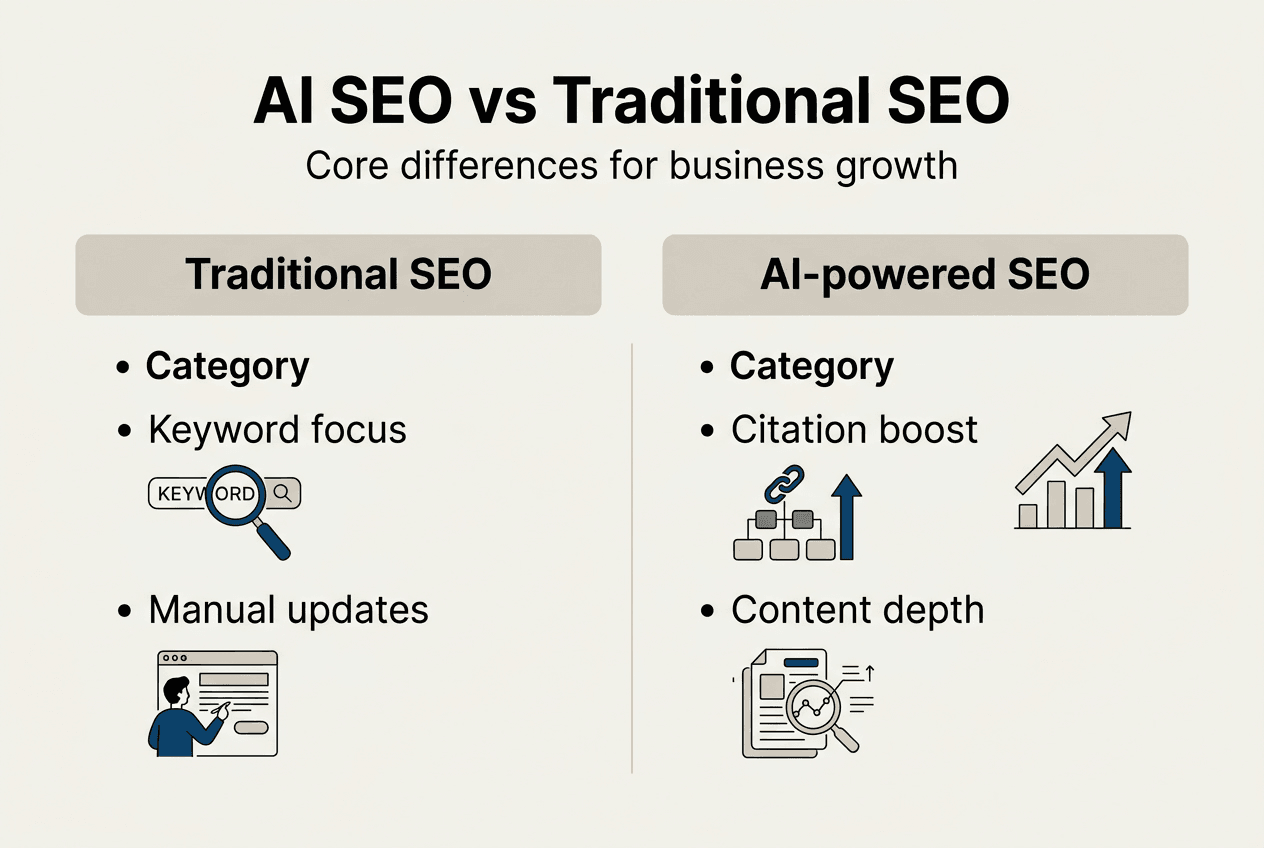
| Aspect | Traditional SEO | AI-Powered SEO |
|---|---|---|
| Primary goal | Rank high in search results | Get cited and recommended by AI |
| Content focus | Keywords and backlinks | Structure, depth, and semantic relevance |
| Ranking signals | PageRank, domain authority | Content quality, comprehensiveness, citations |
| Search behavior | Users click through results | AI summarizes and recommends directly |
| Measurement | Position tracking, click rates | Citation frequency, AI referral traffic |
A surprising insight reveals that content intention may be less important than structure for AI search success. While traditional SEO emphasizes matching user intent with keywords, AI platforms prioritize how information is organized, the depth of coverage, and the presence of clear, factual answers to common questions.
Three main considerations for SMBs adopting AI SEO:
- Adapting to AI content preferences requires shifting from keyword density to semantic richness, ensuring your content answers related questions comprehensively rather than targeting isolated search terms.
- Understanding AI search ranking disparities means recognizing that 80% of sources cited by AI platforms don't appear in Google's top 100 organic results, particularly for local searches where AI platforms use different quality signals.
- Balancing human and AI writing involves maintaining authentic voice and expertise while structuring content to meet machine readability requirements, avoiding over-optimization that sacrifices user experience.
The citation disparity presents both challenge and opportunity. Your business might rank well in traditional search yet remain invisible in AI recommendations, or conversely, achieve strong AI visibility without top Google positions. This divergence matters especially for local businesses, where AI platforms increasingly pull recommendations from sources beyond traditional search leaders.
Pro Tip: Avoid relying solely on Google rankings to measure success. Many AI sources cite different references, especially for local searches, meaning you need to track AI platform visibility separately from traditional metrics. Monitor which AI tools mention your business and adjust your content strategy accordingly.
The AI search ranking differences also affect how you approach content creation. Traditional SEO often rewards frequent publishing of shorter content, while AI-powered strategies favor less frequent publication of comprehensive, authoritative pieces that demonstrate genuine expertise.
Another key difference involves update frequency. Traditional SEO benefits from regular content refreshes to maintain rankings, whereas AI platforms value content stability and consistency, penalizing frequent major revisions that might indicate unreliable information.
Implementing AI-powered SEO for your small or medium business
Transitioning to AI-powered SEO doesn't require abandoning your existing optimization efforts. Instead, layer AI-focused strategies onto your current foundation to expand visibility across both traditional and emerging platforms.
Start with these practical steps:
- Audit current content for AI compatibility by checking structure, depth, and whether it answers complete question sets rather than isolated queries
- Enhance content structure using clear headings, bullet points, tables, and FAQ sections that AI can easily parse and extract
- Use AI tools for keyword analysis and intent mapping to identify question clusters and semantic relationships your audience explores
- Implement schema markup and structured data to help AI platforms understand your content context and authority
- Create comprehensive pillar content that covers topics exhaustively rather than surface-level blog posts
Local SEO requires special attention in AI contexts. Focus on geo-targeted keywords within naturally written content, optimize your Google Business Profile with complete information, and ensure your NAP (name, address, phone) consistency across all platforms. AI platforms heavily weight local signals when making recommendations for location-based queries.
Leveraging AI for generating rich snippets, FAQs, and user intent alignment accelerates your optimization process. AI tools can identify common questions your audience asks, suggest content gaps in your existing pages, and even help structure information for maximum machine readability while maintaining human appeal.
Pro Tip: Integrate original research and ensure content >1500 words to significantly improve AI search traffic and success rate. AI platforms favor authoritative, comprehensive content that demonstrates genuine expertise through data, case studies, or unique insights unavailable elsewhere.
Continuous monitoring and adjustment remain critical as AI SEO evolves rapidly. Track which AI platforms cite your content, monitor referral traffic from AI sources, and adjust your strategy based on performance data. What works today may need refinement as AI algorithms become more sophisticated.
The AI search positioning tips emphasize that consistency matters more than perfection. Start with your highest-value content, optimize it thoroughly for AI platforms, then expand to additional pages systematically rather than attempting to transform everything simultaneously.
For local businesses specifically, AI local SEO strategies focus on building topical authority within your geographic area. Create content that addresses local concerns, references local landmarks and events, and demonstrates deep understanding of your community's unique needs.
Implementation timelines vary by business size and existing content quality. Most SMBs see initial AI citation improvements within 60-90 days of implementing structured optimization, with substantial traffic increases appearing around the six-month mark as AI platforms recognize your content authority.
Boost your business with expert AI-powered SEO services
Implementing AI-powered SEO strategies requires expertise, time, and ongoing optimization that many business owners struggle to manage alongside daily operations. Professional SEO services streamline this process by leveraging AI technology to analyze your market, identify opportunities, and implement proven strategies that generate measurable results.
One critical element often overlooked is review generation and management, which significantly impacts AI recommendations for local businesses. AI platforms heavily weight customer feedback when suggesting services, making systematic review acquisition essential for visibility.
For businesses needing complete online presence optimization, professional websites services ensure your site meets both traditional SEO standards and AI platform requirements from the ground up. Alternatively, website rental options provide fully AI-optimized sites without the upfront investment, ideal for businesses testing new markets or services.
What is AI-powered SEO? FAQs
What distinguishes AI-powered SEO from traditional SEO?
AI-powered SEO focuses on getting cited and recommended by AI platforms through content structure, depth, and semantic relevance, while traditional SEO prioritizes ranking positions in search engine results pages. The key difference lies in optimization targets: AI platforms evaluate content comprehensiveness and authority differently than traditional ranking algorithms. Both approaches complement each other, with AI-powered strategies expanding visibility beyond conventional search results.
How quickly can SMBs expect results using AI-powered SEO?
Most businesses see initial AI citations within 60-90 days of implementing structured optimization strategies. Substantial traffic increases typically appear around six months as AI platforms recognize content authority and begin recommending it consistently. Results vary based on content quality, competition level, and implementation thoroughness, with businesses publishing comprehensive, research-backed content seeing faster adoption.
Does AI-powered SEO replace human content creators?
No, AI-powered SEO enhances rather than replaces human expertise. While AI tools assist with analysis, structure optimization, and performance tracking, human creators provide the authentic voice, industry knowledge, and strategic thinking that resonates with audiences. The most effective approach combines human expertise with AI-powered optimization tools to create content that satisfies both platform algorithms and reader needs.
How does AI SEO impact local search rankings?
AI platforms use different quality signals for local recommendations, with 80% of cited sources not appearing in Google's top 100 results. This creates opportunities for local businesses to gain visibility through AI recommendations even without top traditional rankings. Focus on comprehensive local content, consistent NAP information, active review generation, and geo-targeted topics to improve AI platform citations for location-based queries.
What types of content perform best for AI-powered SEO?
Comprehensive content exceeding 1500 words with original research, clear structure, and multiple formats (text, tables, lists, FAQs) performs best. AI platforms favor content that answers complete question sets, demonstrates expertise through data or case studies, and provides actionable insights unavailable elsewhere. Quality consistently outweighs quantity, with one thorough piece generating more citations than multiple superficial articles on related topics.