

You have probably heard that organic search is free traffic, a set-it-and-forget-it strategy that magically brings customers to your door. The reality is far more nuanced. Organic search requires deliberate effort, ongoing optimization, and a deep understanding of how search engines connect users with the content they need. For small to medium-sized businesses aiming to boost online visibility and capture local customers, mastering organic search is not optional, it is essential. This guide breaks down what organic search truly means, how it works, and the practical steps you can take to harness its power for sustainable growth.
Table of Contents
- Key takeaways
- What is organic search and why does it matter for your business?
- How organic search works: algorithms, rankings, and user intent
- Comparing organic search with paid search: advantages and challenges
- How to optimize your business for organic search success
- Boost your organic search success with expert support
- Frequently asked questions
Key Takeaways
| Point | Details |
|---|---|
| Organic search drives traffic | Organic search drives a substantial portion of website traffic and is earned through relevance and quality rather than paid spend. |
| Local intent matters | Local intent matters because it helps capture visitors who are closer to conversion. |
| Content quality and technical SEO | Content quality and technical SEO together yield higher rankings and sustainable visibility over time. |
| Understand user intent | Understanding user intent informs content creation and keyword choices to match what shoppers want. |
What is organic search and why does it matter for your business?
Organic search refers to the unpaid listings that appear on search engine results pages when users type queries into Google, Bing, or other platforms. Unlike paid advertisements that require ongoing spending, organic results are earned through relevance, quality, and authority. When someone searches for a service you offer, appearing organically means your website meets the criteria search engines use to determine value and trustworthiness.
For small and medium-sized businesses targeting local customers, organic search becomes even more critical. Your potential clients are actively looking for solutions, and organic search accounts for over 50% of website traffic on average. This channel delivers visitors who are already interested in what you provide, making them far more likely to convert than cold traffic from other sources. The trust factor matters too. Users tend to skip paid ads and click on organic listings because they perceive them as more credible and less sales-focused.
The benefits extend beyond immediate clicks. Organic search builds compounding returns over time. A well-optimized page can attract visitors for months or years without additional investment, unlike paid campaigns that stop delivering the moment your budget runs out. This makes organic search one of the highest ROI channels available, especially for businesses with limited marketing budgets. Key metrics to track include keyword rankings, organic traffic volume, bounce rates, and conversion rates from organic visitors. Together, these indicators reveal whether your optimization efforts are moving the needle.
Pro Tip: Focus on long-tail keywords that reflect specific local intent, like "emergency plumber in downtown Austin" rather than generic terms like "plumber." These phrases have lower competition and attract users closer to making a decision.
"Organic search is not about gaming the system. It is about creating genuine value that search engines recognize and reward."
Consider these core advantages:
- Higher trust and credibility compared to paid ads
- Better long-term return on investment
- Sustainable traffic that compounds over time
- Ability to target users at different stages of the buying journey
- Enhanced organic traffic business growth through strategic content
How organic search works: algorithms, rankings, and user intent
Search engines use sophisticated algorithms to evaluate billions of web pages and determine which ones best answer each query. These algorithms consider hundreds of ranking factors, from the words on your page to the number and quality of other sites linking to you. The goal is always the same: deliver the most relevant, trustworthy, and useful results to the person searching.

User intent sits at the heart of this process. Search engines classify queries into three main categories. Informational searches seek knowledge, like "how to fix a leaky faucet." Navigational searches aim to reach a specific website, such as "Facebook login." Transactional searches indicate readiness to take action, like "buy running shoes online." Understanding which intent your target keywords reflect helps you create content that matches what users actually want.
Ranking factors fall into several buckets. Content quality measures how well your page answers the query, including depth, accuracy, and readability. Technical factors assess site speed, mobile friendliness, and secure connections. Backlinks from authoritative sites signal trust and expertise. User experience metrics like time on page and click-through rates reveal whether visitors find your content valuable. Google updates its algorithm hundreds of times per year, constantly refining how these factors interact.
Here is how the ranking process typically unfolds:
- A user enters a search query
- The algorithm scans its index of web pages
- It evaluates relevance based on keywords and semantic meaning
- It assesses authority through backlinks and domain trust
- It considers user experience signals and technical performance
- It ranks results and displays the most relevant pages first
The dynamic nature of these algorithms means optimization is never truly finished. What works today may need adjustment tomorrow as search engines evolve. This is why businesses serious about organic search invest in ongoing SEO ranking strategies rather than one-time fixes. The payoff is worth it. Pages that align with both algorithmic criteria and genuine user needs consistently outperform competitors who treat SEO as a checkbox exercise.
| Ranking factor | Impact level | What it measures |
|---|---|---|
| Content quality | High | Relevance, depth, accuracy, and value to users |
| Backlinks | High | Authority and trustworthiness from external sites |
| Technical SEO | Medium | Site speed, mobile optimization, security |
| User experience | Medium | Engagement metrics, bounce rate, time on page |
| Keyword optimization | Medium | Strategic use of target terms without over-stuffing |
Comparing organic search with paid search: advantages and challenges
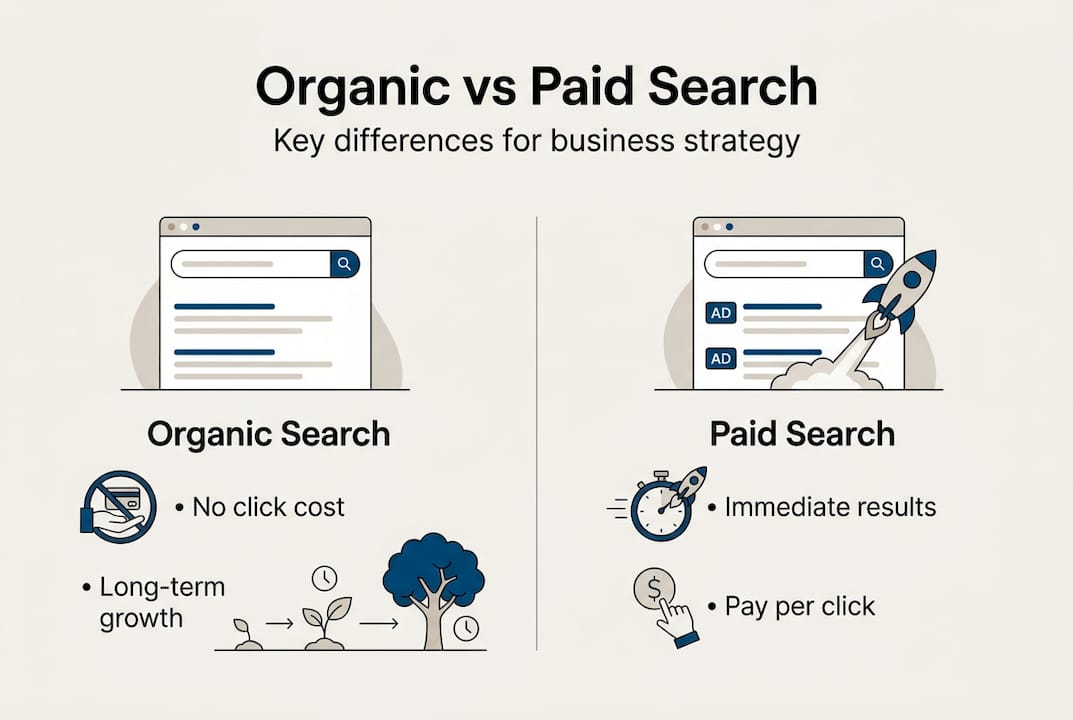
Paid search delivers immediate visibility. You create an ad, set a budget, and start appearing at the top of search results within hours. The moment you stop paying, however, that visibility disappears. Organic search works differently. It requires upfront investment in content, technical optimization, and link building, but the results compound over time without ongoing ad spend.
The cost structure reveals a fundamental difference. Paid search operates on a pay-per-click model where you pay each time someone clicks your ad, regardless of whether they convert. Organic search has no direct cost per visitor, though it requires resources for content creation, technical maintenance, and strategic planning. For many businesses, SEO yields better long-term ROI compared to paid marketing because the benefits persist long after the initial work.
Traffic quality often favors organic results. Users trust organic listings more and tend to engage more deeply with content they find naturally. Paid ads can feel intrusive, leading some visitors to click away quickly. Organic visitors typically spend more time on site and convert at higher rates because they perceive the content as more credible and less sales-driven.
| Factor | Organic search | Paid search |
|---|---|---|
| Cost structure | No per-click cost, requires ongoing optimization effort | Pay per click, stops when budget depleted |
| Time to results | Weeks to months for meaningful traction | Immediate visibility upon campaign launch |
| Traffic longevity | Compounds over time, sustainable long-term | Ends when spending stops |
| Trust level | Higher perceived credibility | Lower trust, seen as advertising |
| Control | Limited direct control over rankings | Full control over ad placement and budget |
Challenges exist for both channels. Organic search demands patience and expertise. You cannot simply flip a switch and expect results. Algorithm changes can impact rankings unpredictably. Competition for top positions in valuable niches is fierce. Paid search, meanwhile, requires continuous budget allocation and faces rising costs per click in competitive markets. Ad fatigue can reduce effectiveness over time.
Most successful businesses adopt a hybrid approach. Use paid search for immediate needs like product launches or seasonal promotions. Build organic search as your long-term foundation for sustainable growth. This combination maximizes visibility while managing costs effectively. Understanding the SEO vs paid marketing ROI trade-offs helps you allocate resources strategically.
Pro Tip: Run paid campaigns for high-intent keywords while you build organic rankings for those same terms. Once your organic position strengthens, you can reduce paid spending and reallocate budget to new opportunities.
Key considerations when choosing your approach:
- Budget availability for ongoing paid campaigns versus upfront SEO investment
- Timeline urgency for results
- Competitive landscape in your industry
- Long-term business goals and growth strategy
- Internal resources or agency support for implementation
How to optimize your business for organic search success
Optimization starts with understanding what your customers actually search for. Keyword research reveals the specific phrases and questions your target audience uses when looking for solutions you provide. Focus on terms with local intent if you serve a geographic area. Tools like Google Keyword Planner, Ahrefs, or SEMrush help identify search volume and competition levels for different keywords.
Once you know your target keywords, optimize your website elements strategically. Page titles should include your primary keyword naturally while remaining compelling to human readers. Meta descriptions, while not direct ranking factors, influence click-through rates by previewing your content value. Header tags organize content logically and signal topic relevance to search engines. Body content must deliver genuine value, answering user questions thoroughly while incorporating keywords naturally.
Local businesses gain significant advantages from optimizing their Google Business Profile. This free tool puts your business on Google Maps and local search results, making it easier for nearby customers to find you. Complete every section of your profile, add high-quality photos, encourage customer reviews, and respond to feedback promptly. Local SEO tactics significantly improve search visibility for nearby customers.
Building authority requires earning quality backlinks from reputable websites in your industry or local area. Local citations, which are mentions of your business name, address, and phone number on other sites, reinforce your geographic relevance. Focus on getting listed in legitimate directories, local business associations, and industry-specific platforms. Quality matters far more than quantity. A single link from a trusted source carries more weight than dozens from low-quality sites.
Follow these steps to implement effective optimization:
- Conduct thorough keyword research focused on local and long-tail terms
- Audit your current website for technical issues like slow loading or mobile problems
- Create or update core pages with optimized titles, headers, and content
- Set up and fully optimize your Google Business Profile
- Develop a content strategy that addresses customer questions and needs
- Build relationships for natural backlink opportunities
- Monitor performance using Google Analytics and Search Console
- Refine your approach based on data and evolving best practices
AI tools now enhance every stage of this process. Use AI for competitive analysis, content ideation, and performance tracking. Automated tools can identify technical issues faster than manual audits. The key is combining AI efficiency with human strategy and creativity. Your local SEO AI strategy should leverage technology while maintaining the authentic voice and local knowledge that sets your business apart.
Ongoing maintenance matters as much as initial optimization. Search engines favor fresh, updated content. Regularly review your top pages and enhance them with new information, updated statistics, or expanded sections. Engage with customer reviews, both positive and negative, to show active management and build trust. Track your keyword rankings and adjust your strategy when positions slip or new opportunities emerge.
Pro Tip: Create location-specific landing pages if you serve multiple areas. Each page should feature unique content about that location, not just template text with the city name swapped out.
Practical tactics to increase search visibility strategies include:
- Publishing comprehensive guides that answer common customer questions
- Adding schema markup to help search engines understand your content
- Optimizing images with descriptive file names and alt text
- Creating video content that appears in video search results
- Building internal links between related pages on your site
- Ensuring fast page load times across all devices
- Securing your site with HTTPS encryption
Boost your organic search success with expert support
Mastering organic search takes time, expertise, and consistent effort. While the strategies outlined above provide a solid foundation, many businesses accelerate results by partnering with professionals who live and breathe digital marketing daily. Expert support brings advanced tools, proven methodologies, and the experience to navigate algorithm changes without losing momentum.

Professional services complement your organic efforts with tactics like geo-fencing that target customers in specific locations, custom website solutions optimized for both search engines and conversions, and strategic content that positions your business as the obvious choice in your market. These integrated approaches save you time while maximizing return on investment. Whether you need help with technical audits, content creation, or comprehensive strategy development, working with specialists who understand both local markets and AI-powered optimization can transform your online presence. Consider exploring waiting room services that keep potential customers engaged even during high-traffic periods, ensuring you never lose a lead due to site performance issues.
Frequently asked questions
What exactly is organic search?
Organic search refers to the unpaid listings that appear on search engine results pages when users enter queries. These results are determined by search engine algorithms evaluating relevance, quality, and authority rather than paid advertising. Businesses earn organic visibility through optimization efforts that align their content with what users seek and what search engines reward.
How does organic search differ from paid search?
Organic search delivers traffic without direct cost per click, building sustainable visibility over time through SEO efforts. Paid search requires ongoing budget allocation and provides immediate visibility that stops when spending ends. Organic results typically generate higher trust and better long-term ROI, while paid ads offer faster results and precise budget control.
What factors most influence organic search rankings?
Content quality and relevance to user queries form the foundation of strong rankings. Technical factors like site speed, mobile optimization, and secure connections matter significantly. Backlinks from authoritative websites signal trust and expertise. User experience metrics including engagement, time on page, and click-through rates reveal content value to search engines.
How does local SEO impact organic search for my business?
Local SEO optimizes your online presence for geographic-specific searches, helping nearby customers discover your business. This includes optimizing your Google Business Profile, building local citations, and creating location-focused content. For businesses serving specific areas, local SEO dramatically improves visibility in map results and location-based queries where purchase intent runs highest.
What steps should I take to start optimizing for organic search?
Begin with keyword research to identify terms your customers actually use when searching for your services. Audit your website for technical issues and optimize core pages with strategic keywords in titles, headers, and content. Set up and complete your Google Business Profile fully. Create valuable content that answers customer questions, build quality backlinks gradually, and monitor performance regularly to refine your approach based on real data.