
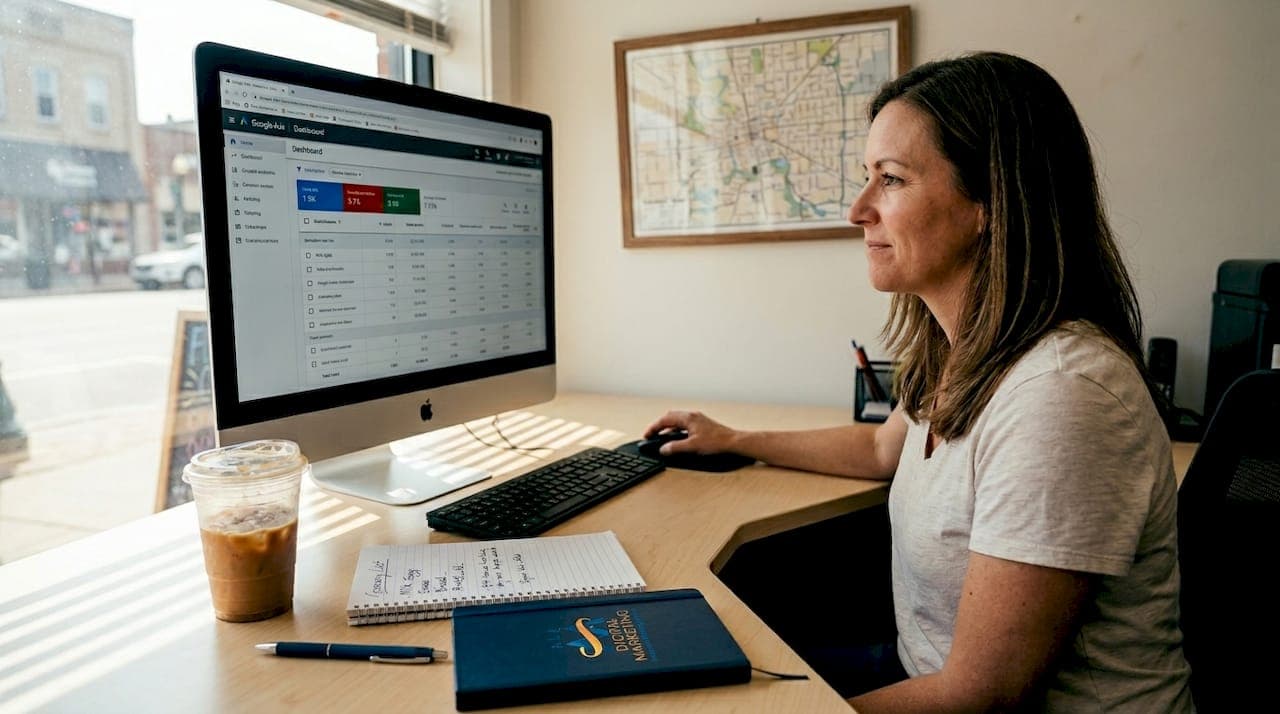
Local businesses are losing leads every day to competitors who figured out one thing: paid search done right is faster than any other digital channel. Over 60% of local searches now happen on mobile devices, which means your ads need to show up in the right place, at the right moment, for the right person. Most local PPC campaigns fail not because the budget is too small, but because the strategy is built for a national brand, not a neighborhood business. This guide breaks down exactly what works, what to skip, and how to stretch every dollar you spend on paid search.
Table of Contents
- What makes local PPC different?
- 1. Start with Search campaigns for control
- 2. Use Performance Max strategically
- 3. Combine Google Ads and Local Services Ads
- 4. Prioritize mobile-first ads and landing pages
- 5. Boost ROI with remarketing and audience targeting
- Ready to turn your local PPC into a lead machine?
- Frequently asked questions
Key Takeaways
| Point | Details |
|---|---|
| Start with Search campaigns | Search campaigns provide the best control for optimizing local PPC before scaling with other options. |
| Layer Performance Max carefully | Only add Performance Max once Search campaigns are profitable to avoid wasted spend. |
| Use both Google Ads and Local Services Ads | Combining platforms captures more local leads than relying on just one approach. |
| Think mobile-first | Most local searches happen on mobile, so optimizing ads and landing pages for mobile is essential. |
| Retarget for ROI | Remarketing to previous visitors increases conversions and gets more value from ad spend. |
What makes local PPC different?
Local PPC is not just national advertising with a zip code added. Targeting a specific geography rather than broad keywords is the foundation of every effective local campaign. The intent behind a local search is usually urgent: someone needs a plumber, a dentist, or a pizza place right now. That urgency changes everything about how you should structure your ads, your budget, and your landing pages.
Budget efficiency matters far more at the local level. A national brand can absorb wasted clicks. You cannot. That is why measuring results quickly and cutting what does not work is non-negotiable for small and medium-sized businesses. Our ROI-focused PPC campaign tips walk through the exact metrics worth tracking from day one.
You also need to understand the difference between two major platforms:
- Google Ads (PPC): You pay per click. Broad keyword targeting. Full control over bids, audiences, and ad copy.
- Local Services Ads (PPL): You pay per lead, not per click. Google vets your business first. Your listing appears above standard ads.
- The smart move: Use both platforms together for maximum local market coverage.
- Mobile-first is mandatory: Most local searchers are on their phones, so every element of your campaign must be built around that reality.
With these goals in mind, let's break down the most effective PPC moves for local businesses.
1. Start with Search campaigns for control
Search campaigns are the best starting point for any local business running paid ads. You choose the exact keywords, set your own bids, and see precisely which search terms are driving calls and form fills. That level of control is impossible to get from automated campaign types right out of the gate.
Here is a recommended setup process:
- Define your core services. List the three to five services that generate the most revenue. Build one tightly focused ad group around each one.
- Use phrase and exact match keywords. Broad match burns budget fast for local campaigns. Start narrow and expand only when you have data.
- Write location-specific ad copy. Mention your city or neighborhood in the headline. It signals relevance and improves click-through rates.
- Set geographic bid adjustments. Increase bids for the zip codes closest to your business or where your best customers live.
- Track conversions from day one. Install Google Ads conversion tracking before you spend a single dollar. Without it, you are flying blind.
Once your Search campaigns show a positive return, you have real benchmarks. Start with Search for control, then layer Performance Max for scale only after profitability is confirmed. Our AI-driven local PPC guide covers how to use AI tools to sharpen your keyword strategy even further.
Pro Tip: Do not add Performance Max to your account until your Search campaigns have run for at least 30 days and show a cost per lead you are comfortable with. Adding it too early means you lose the data clarity you need to make smart decisions.
2. Use Performance Max strategically
Performance Max is Google's all-in-one campaign type. It places ads across Search, Display, YouTube, Maps, Gmail, and Discover from a single campaign. That sounds powerful, and it can be, but it comes with a serious trade-off: Google's algorithm controls most of the decisions.
"Avoid Performance Max alone for local campaigns. Use it only to scale after your Search campaigns are already profitable." This is the single most important rule for local businesses exploring automated campaign types.
Here is what you need to know before turning it on:
- It needs volume to work. Performance Max optimizes based on conversion data. Without enough conversions, it guesses, and guessing wastes your budget.
- You lose keyword-level visibility. You cannot see which specific search terms triggered your ads the same way you can in Search campaigns.
- Asset quality matters enormously. Upload high-quality images, videos, headlines, and descriptions. Poor assets lead to poor placements.
- Audience signals help. Feed it your existing customer list and website visitor data so it knows who to target from the start.
When Performance Max is used to scale after Search is successful, it can expand your reach to local customers you would never have found through keyword targeting alone. Our AI lead gen guide explains how to pair AI-powered tools with Performance Max for smarter local targeting.
3. Combine Google Ads and Local Services Ads
Most local businesses pick one platform and ignore the other. That is a missed opportunity. Google Ads and Local Services Ads reach different types of searchers, and combining them gives you coverage across more of the search results page.

| Feature | Google Ads | Local Services Ads |
|---|---|---|
| Payment model | Pay per click | Pay per lead |
| Ad placement | Search results, Display, Maps | Top of search results, above Google Ads |
| Targeting method | Keywords and audiences | Service category and location |
| Trust signal | Ad label | Google Guaranteed or Google Screened badge |
| Setup complexity | High | Moderate |
| Best for | Broad reach, full control | High-intent, vetted local leads |
Combining both platforms covers more search types and lead sources than either one alone. Local Services Ads put you at the very top of the page with a trust badge that Google Ads simply cannot replicate. Google Ads give you the keyword control and audience flexibility that Local Services Ads lack.
Here is when to lean on each one:
- Use Local Services Ads when you want fast, vetted leads with minimal setup and you qualify for Google's verification process.
- Use Google Ads when you want to target specific keywords, promote seasonal offers, or reach customers earlier in their research phase.
- Use both when you want to dominate the top of the search results page and capture leads at every stage of intent.
For a deeper look at how paid and organic strategies work together, see our breakdown of SEO and PPC for local leads and our guide to local business growth with PPC.
4. Prioritize mobile-first ads and landing pages
This is not optional. Over 60% of local searches happen on mobile devices, which means the majority of people clicking your ads are on their phones. If your ad or landing page creates any friction on mobile, you are paying for clicks that will never convert.
Here is how to build a mobile-first local PPC setup:
- Enable call-only ads. For service businesses, a phone call is often the highest-value conversion. Call-only ads skip the landing page entirely and send users straight to your phone number.
- Add click-to-call extensions. Every Search ad should have your phone number attached so mobile users can call with one tap.
- Use location extensions. Link your Google Business Profile to your ads so your address and map pin appear directly in the search results.
- Build fast landing pages. A page that takes more than three seconds to load on mobile will lose most visitors. Use a simple layout, one clear call to action, and no unnecessary images.
- Test your pages on real devices. Open your landing page on your own phone. If it feels slow or cluttered, your customers feel the same way.
Pro Tip: Add callout extensions that highlight local trust signals like "Serving [Your City] Since 2005" or "Same-Day Service Available." These small additions increase click-through rates and reinforce local credibility. Explore how search box PPC optimization can further sharpen your mobile ad performance.
5. Boost ROI with remarketing and audience targeting
Most local businesses focus entirely on winning new visitors. But the people who already visited your website are your warmest leads. Remarketing shows your ads specifically to those past visitors as they browse other sites, watch YouTube, or search again on Google.
The catch is that remarketing needs volume to work properly. Start remarketing after 1,000 unique visitors so your audience data is statistically meaningful. Running remarketing on a tiny audience wastes budget and produces unreliable results.
| Campaign type | Average click-through rate | Average conversion rate | Cost per lead |
|---|---|---|---|
| Standard Search campaign | 3-5% | 4-6% | Higher |
| Remarketing campaign | 8-12% | 10-15% | Lower |
The numbers tell a clear story. Remarketing consistently outperforms cold traffic campaigns because you are reaching people who already know your business. Here is how to segment your remarketing audiences for local campaigns:
- All website visitors: The broadest audience. Good for brand awareness and staying top of mind.
- Service page visitors: People who looked at a specific service. Show them ads for that exact service with a strong offer.
- Repeat visitors: Anyone who visited more than once is highly interested. Prioritize these users with higher bids.
- Ad interaction audiences: Target users who clicked your ad but did not convert. A follow-up offer often closes the deal.
For more advanced tactics, our AI-powered remarketing tips show how to layer AI targeting on top of your remarketing lists. You can also combine remarketing with local listing strategies covered in our guide to increasing local business views for a full-funnel approach.
Ready to turn your local PPC into a lead machine?
The strategies in this article work. But executing them correctly while running a business is a different challenge entirely. At Digital Marketing All, we specialize in building PPC campaigns that are designed specifically for local businesses, not recycled national templates.
We combine AI-powered search optimization with proven Google Ads and Local Services Ads strategies to help you dominate your local market. From mobile-first ad builds to remarketing funnels and search box optimization, our team handles every layer of your paid search presence. If you are ready to stop guessing and start generating consistent local leads, visit digitalmarketingall.org to see how we can build a campaign that actually works for your market.
Frequently asked questions
Why not use Performance Max alone for local PPC?
Performance Max lacks tight targeting and keyword-level data that Search campaigns provide. Start with Search to establish control and benchmarks, then add Performance Max only after your campaigns are profitable.
How soon should I add remarketing to my local PPC strategy?
Begin remarketing once you have reached at least 1,000 unique site visitors so your audience data is large enough to produce accurate results.
What's the biggest mistake local businesses make with PPC?
Jumping into automated campaigns or scaling budgets before confirming ROI from manual Search campaigns. Always validate your cost per lead with Search first.
Do Local Services Ads replace Google Ads for local businesses?
No. Each platform reaches different audiences at different stages of intent. Running both together gives you the widest possible coverage across local search results.
How important is mobile optimization for a local business PPC campaign?
Extremely important. Over 60% of local searches are made from mobile devices, so ads and landing pages that are not optimized for mobile will lose the majority of potential leads.