

Standing out online as a local business is harder than ever. With countless competitors and rapidly changing search algorithms, many small business owners struggle to attract nearby customers. A well-crafted content strategy tailored for local SEO can transform your online visibility and drive more foot traffic to your door. This guide walks you through preparing, executing, and optimizing an AI-driven local content strategy that connects you with the customers who need you most.
Table of Contents
- Key Takeaways
- Preparing your local business content strategy
- Executing your AI-driven local content creation
- Verifying and optimizing your local content strategy results
- Enhance your local content strategy with our expert services
- Frequently asked questions
Key Takeaways
| Point | Details |
|---|---|
| Foundational prep | Define audience and measurable local SEO goals before creating content to guide strategy and measurement. |
| Audience research | Use surveys and analytics to build customer personas that reveal language and topics your local audience cares about. |
| AI driven topics | Leverage AI to generate locally relevant topics and keywords to accelerate content creation. |
| Hyperlocal themes | Create content around local events neighborhoods regulations and community stories to boost relevance. |
| Track success | Set clear metrics and monitor results to assess impact and adjust tactics. |
Preparing your local business content strategy
Before you create a single piece of content, you need solid groundwork. Think of your content strategy as building a house: without a strong foundation, everything crumbles. Successful local content strategies start with thorough audience and objective definition, so investing time here pays dividends later.
Start by identifying your ideal local customer. Who are they? What problems keep them up at night? Where do they search for solutions? Create detailed customer personas that include demographics, pain points, search behavior, and preferred content formats. Use surveys, social media insights, and Google Analytics to gather real data about your existing customers. This research reveals the exact language your audience uses, which becomes the backbone of your keyword strategy.
Next, set clear, measurable goals aligned with local search improvement. Vague aspirations like "get more customers" won't cut it. Instead, aim for specific targets: increase local search rankings for five key terms by three positions within 90 days, boost Google Business Profile views by 40%, or generate 25 qualified local leads monthly through content. Write these goals down and assign deadlines. Measurable objectives let you track progress and adjust tactics when something isn't working.
Develop content themes that resonate with your local community. Generic business advice won't connect with customers searching for solutions in your area. Instead, focus on local events, neighborhood-specific problems, regional regulations, and community stories. If you run a bakery in Austin, create content about "best spots for wedding cake tastings in South Austin" or "how Austin humidity affects cake decorating." This hyperlocal approach signals relevance to both search engines and potential customers.
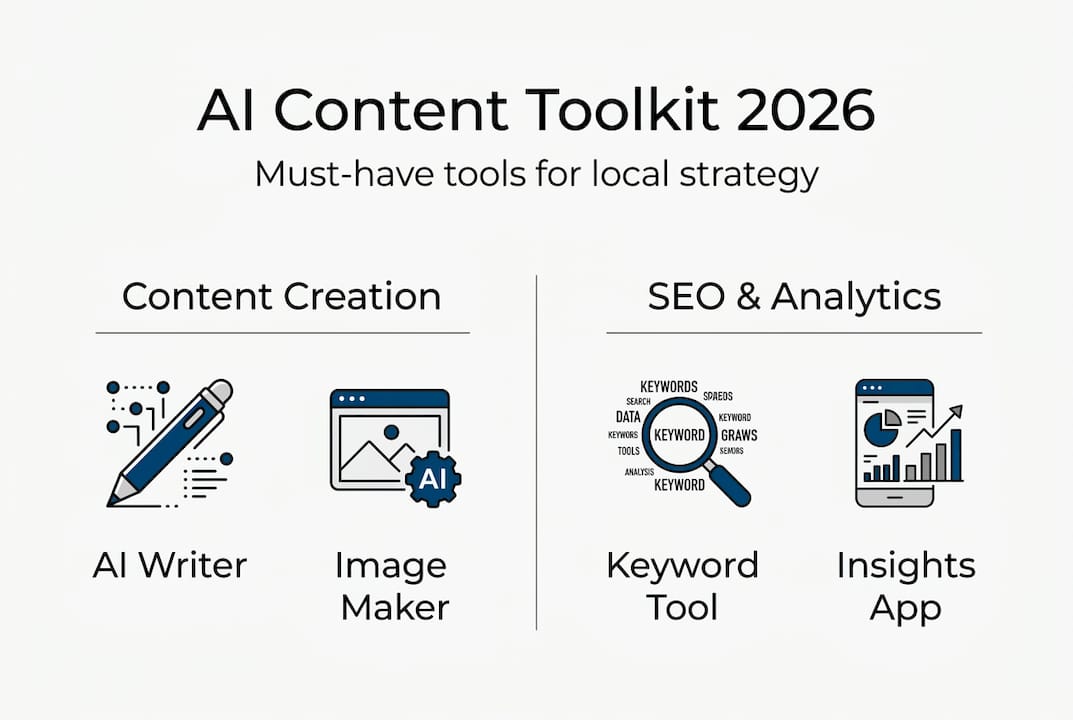
Assemble your toolkit for AI-powered content creation and local SEO management. You need platforms for keyword research, content generation, performance tracking, and social media scheduling. The right tools eliminate hours of manual work and help you maintain consistency even when you're swamped with daily operations.
Pro Tip: Use AI-powered audience analysis tools to identify emerging local trends before your competitors notice them. These platforms analyze search patterns, social conversations, and review mentions to reveal what your community cares about right now.
Prepare a content calendar that organizes your production and publication schedule. Map out topics for the next 90 days, assigning specific publish dates and content formats. Include seasonal events, local holidays, and industry-specific timing. A plumber in Minneapolis should create furnace maintenance content in September, not January when everyone's already dealing with frozen pipes. Your calendar keeps you proactive instead of reactive.
| Tool Category | Top Options | Primary Benefit | Best For |
|---|---|---|---|
| AI Content Generation | ChatGPT, Jasper, Copy.ai | Rapid topic ideation and draft creation | Time-pressed business owners |
| Local SEO Management | BrightLocal, Moz Local, SEMrush | Track local rankings and citations | Multi-location businesses |
| Keyword Research | Ahrefs, Google Keyword Planner | Discover local search terms | Content planning |
| Social Scheduling | Buffer, Hootsuite | Consistent posting across platforms | Small teams |
Understanding social media strategies complements your content efforts by amplifying reach to local audiences across multiple channels.
Executing your AI-driven local content creation
With your foundation in place, it's time to create content that attracts local customers. AI helps optimize local content by generating tailored topics and keywords, making the creation process faster and more effective than traditional methods.
Follow this step-by-step process for consistent content production:
- Use AI tools to research trending local topics by analyzing search volumes, question patterns, and competitor content gaps in your area.
- Generate keyword-rich topic ideas that match your customer personas and address specific local needs or questions.
- Create detailed content outlines that structure information logically and include primary and secondary local keywords naturally.
- Draft engaging content using AI assistance, then personalize it with your unique voice, local examples, and business-specific insights.
- Optimize each piece for local SEO by including your city and neighborhood names, nearby landmarks, and region-specific terminology.
- Add multimedia elements like locally-relevant images, videos of your business or team, and infographics that visualize local data.
- Incorporate schema markup for local business information to help search engines understand your geographic relevance.
- Update your Google Business Profile with content snippets, offers, and posts that link back to your new articles.
- Schedule publication according to your content calendar, maintaining consistent timing to build audience expectations.
- Promote each piece across social channels, email lists, and local online communities where your customers gather.
Pro Tip: Use AI to repurpose existing content into multiple formats for broader reach. Transform a blog post about local services into a video script, social media carousel, email newsletter series, and podcast episode. This multiplication strategy maximizes your content investment.
Create engaging text, video, and image content tailored to local audiences. Different customers consume information differently. Some want quick video tutorials, others prefer detailed written guides, and many respond to visual infographics. Diversifying your content formats increases the chances of connecting with potential customers regardless of their preferences.

Optimize your Google Business Profile content continuously. This free platform is often the first impression local customers get of your business. Post weekly updates about services, share customer success stories, highlight special offers, and answer questions promptly. Each interaction signals to Google that your business is active and relevant, improving your local search visibility.
Implement a consistent publishing calendar to maintain audience engagement. Sporadic content confuses both search engines and potential customers. Whether you publish twice weekly or monthly, stick to your schedule. Consistency builds trust and keeps your business top-of-mind when customers need your services. Set realistic publishing goals you can maintain long-term rather than burning out with an overly ambitious schedule.
Staying current with SEO trends ensures your local content strategy remains effective as search algorithms evolve.
Verifying and optimizing your local content strategy results
Creating content is only half the battle. You must measure performance and refine your approach based on real data. Measuring local search performance and adapting strategy is key to sustained success, turning good results into exceptional ones.
Track these essential metrics to understand your content's impact:
- Local search rankings for your target keywords across different neighborhoods and nearby cities
- Website traffic from local searches, broken down by source and landing page
- Google Business Profile views, clicks, calls, and direction requests
- Engagement metrics including time on page, bounce rate, and pages per session
- Conversion rates from content visitors to leads, calls, or in-store visits
- Social media engagement on content posts including shares, comments, and saves
- Email open rates and click-through rates when promoting content to your list
Compare different content approaches to identify what resonates most with your local audience:
| Content Type | Average Engagement | Conversion Rate | Time Investment | ROI Score |
|---|---|---|---|---|
| How-to guides | High (8 min avg) | 3.2% | Medium | Excellent |
| Local event coverage | Medium (4 min avg) | 1.8% | Low | Good |
| Video tutorials | Very High (12 min avg) | 4.1% | High | Excellent |
| Customer success stories | Medium (5 min avg) | 5.3% | Medium | Outstanding |
| FAQ articles | Medium (6 min avg) | 2.7% | Low | Very Good |
Avoid these common mistakes that sabotage local content strategies:
- Ignoring location-specific keywords in favor of generic industry terms
- Posting inconsistently or abandoning content creation during busy periods
- Neglecting Google Business Profile updates and customer questions
- Creating content without understanding actual customer search intent
- Targeting overly broad audiences instead of your specific local market
- Failing to optimize for mobile users who make up most local searches
- Overlooking the importance of online reviews in local search rankings
- Copying competitor content instead of offering unique local perspectives
Pro Tip: Use AI analytics tools to automate monitoring and receive alerts when performance dips below your benchmarks. These platforms identify problems early, giving you time to adjust before significant ranking or traffic losses occur.
Conduct regular content audits every quarter to keep your strategy fresh and relevant. Review which topics performed best, identify content gaps your competitors are filling, and update older articles with current information and improved optimization. The local market changes constantly with new businesses, shifting demographics, and evolving customer needs. Your content must reflect these changes to maintain its effectiveness.
Test different headlines, content lengths, multimedia elements, and calls to action systematically. Change one variable at a time so you can attribute performance improvements to specific adjustments. What works for a law firm might not work for a restaurant, and what resonates in one neighborhood might fall flat in another. Let data guide your decisions rather than assumptions.
Learning from startup growth strategies can provide fresh perspectives on scaling your local content efforts efficiently.
Enhance your local content strategy with our expert services
Building an effective local content strategy takes time, expertise, and consistent effort. While this guide provides the roadmap, executing it alongside running your business can feel overwhelming. That's where professional support makes all the difference.
Our search price optimization service helps you outrank competitors by identifying and targeting the exact keywords your local customers use when they're ready to buy. We analyze search intent, competition levels, and conversion potential to focus your content on terms that drive real business results.

Need a website that converts local traffic into customers? Our website services create conversion-focused designs optimized for local search and user experience. We build sites that load fast, look professional, and guide visitors toward contacting you.
Prefer a completely hands-off approach? Our website rental service provides professionally designed, fully maintained websites with zero technical headaches. You get a high-performing online presence without the hassle of updates, security, or hosting management. Focus on serving customers while we handle your digital foundation.
Frequently asked questions
What is a local business content strategy?
A local business content strategy is a planned approach to creating and distributing content that attracts customers in your geographic area. It combines local keyword research, Google Business optimization, and consistent publishing to improve visibility in local search results. Unlike generic content marketing, it focuses specifically on connecting with nearby customers who can visit your physical location or use your local services.
How can AI improve my local content marketing?
AI dramatically accelerates content creation by generating relevant local topics, optimizing keywords, and analyzing audience behavior patterns. These tools identify emerging trends in your community before competitors notice them, suggest content angles based on actual search queries, and automate scheduling across multiple platforms. AI saves hours of manual research while improving targeting precision, letting small business owners compete with larger companies that have dedicated marketing teams.
What common mistakes should I avoid when creating local content?
The biggest errors include ignoring location-specific keywords, posting inconsistently, neglecting Google Business updates, and targeting audiences too broadly. Many businesses also copy competitor content instead of offering unique local perspectives, fail to optimize for mobile users, and overlook how online reviews impact local rankings. Addressing common digital marketing mistakes prevents wasted resources and accelerates results.
How do I measure success with my local business content strategy?
Track local search rankings for target keywords, website traffic from local searches, Google Business Profile engagement metrics, and conversion rates from content visitors to customers. Use analytics platforms to monitor time on page, bounce rates, and pages per session as indicators of content quality. Set specific benchmarks for each metric and review performance monthly, adjusting your strategy based on what the data reveals about customer behavior and content effectiveness.
How often should I publish new local content?
Consistency matters more than frequency. Whether you publish twice weekly or twice monthly, maintain a regular schedule your audience can anticipate. Start with a realistic pace you can sustain long-term rather than burning out with daily posts. Most successful local businesses find that one to two high-quality pieces weekly, combined with regular Google Business updates, builds momentum without overwhelming limited resources. Quality always trumps quantity in local content marketing.
Can I use the same content strategy for multiple locations?
While your overall framework can remain consistent, each location needs customized content addressing that area's specific needs, events, and search patterns. Create separate Google Business Profiles, landing pages, and content streams for each location. Reference local landmarks, neighborhood names, and region-specific issues to signal relevance. Customers quickly recognize generic content that could apply anywhere, and getting found online locally requires genuine local relevance in every piece you publish.
Recommended
- Digital Marketing Glossary | Marketing Terms & ROI Definitions
- SEO Small Business | Dominate Local Search Results
- Local Search Ranking Factors 2026: Boost Your Visibility | Digital Marketing All
- How to Win on Social Media in 2026 | Digital Marketing All
- Master social media for entrepreneurs: boost visibility