

Local small and medium-sized businesses face an overwhelming challenge: choosing digital marketing strategies that deliver measurable local impact without draining limited budgets. With AI-powered tools and evolving search algorithms reshaping the landscape in 2026, selecting the right combination of tactics can mean the difference between thriving and struggling. This guide reveals actionable best practices that blend cutting-edge AI optimization with proven local SEO fundamentals to help you maximize visibility, generate quality leads, and achieve sustainable growth.
Table of Contents
- Selection Criteria For Digital Marketing Best Practices
- Local SEO Fundamentals And Google My Business Optimization
- Balancing Paid Ads And Organic SEO For Local Businesses
- Content Marketing Formats Best Suited For Local Engagement
- Auto-Suggest And AI Recommendation Optimization
Key takeaways
| Point | Details | |-------|---------|| | Budget and AI integration drive strategy selection | Evaluate tactics based on cost-effectiveness, local targeting precision, and compatibility with AI marketing automation tools. | | Google My Business optimization is foundational | Complete GMB profiles with regular updates increase local pack visibility by 50%, driving discovery and trust. | | Combining paid and organic channels boosts conversions | Integrated PPC and SEO campaigns generate 27% higher lead conversions compared to single-channel approaches. | | Video content accelerates local revenue growth | Video marketing drives 49% faster revenue growth through stronger engagement and conversion rates for local audiences. | | Voice search and auto-suggest optimization expand reach | Optimizing for search auto-suggest and voice assistants increases local impressions by 35% and mobile traffic by 25%. |
Selection criteria for digital marketing best practices
Choosing the right digital marketing tactics requires evaluating multiple factors that directly impact your return on investment and local market penetration. The most successful local businesses in 2026 analyze their options through a strategic lens that balances immediate needs with long-term growth potential.
Budget constraints naturally shape your strategy selection. Cost-effectiveness and ease of implementation determine which tactics you can sustain over time without sacrificing quality. Start by calculating your customer acquisition cost and comparing it against the lifetime value of typical clients in your area.
Local audience targeting ensures every dollar spent reaches potential customers within your service area. Geographic precision prevents wasted impressions on audiences outside your delivery radius while maximizing relevance for nearby searchers actively seeking your services. This hyper-local focus reduces cost per lead by up to 40% compared to broader targeting approaches.
Integration with AI-driven marketing tools offers automation benefits that multiply your team's effectiveness. Modern platforms handle bid management, content scheduling, and performance analysis in real time, freeing you to focus on strategy and customer relationships. Look for tools that provide actionable insights rather than just data dumps.
Content formats should match your local audience's consumption preferences. Research shows video outperforms static images by 300% for engagement, while interactive content like polls and quizzes drives 2x higher conversion rates. Test different formats in your market to identify what resonates most.
Balanced use of organic SEO and paid advertising optimizes both immediate visibility and sustainable long-term growth. Organic strategies build authority and trust over months, while paid campaigns deliver instant traffic and testing opportunities. The smartest approach layers both methods to create compounding returns.
Pro Tip: Track your customer journey from first touchpoint to conversion. Most local buyers interact with 3 to 5 marketing channels before purchasing, so understanding your attribution model reveals which tactics deserve more investment.
Local SEO fundamentals and Google My Business optimization
Mastering local SEO creates a powerful foundation that supports every other digital marketing effort. Your Google Business Profile serves as the central hub connecting potential customers to your physical location, services, and reputation.
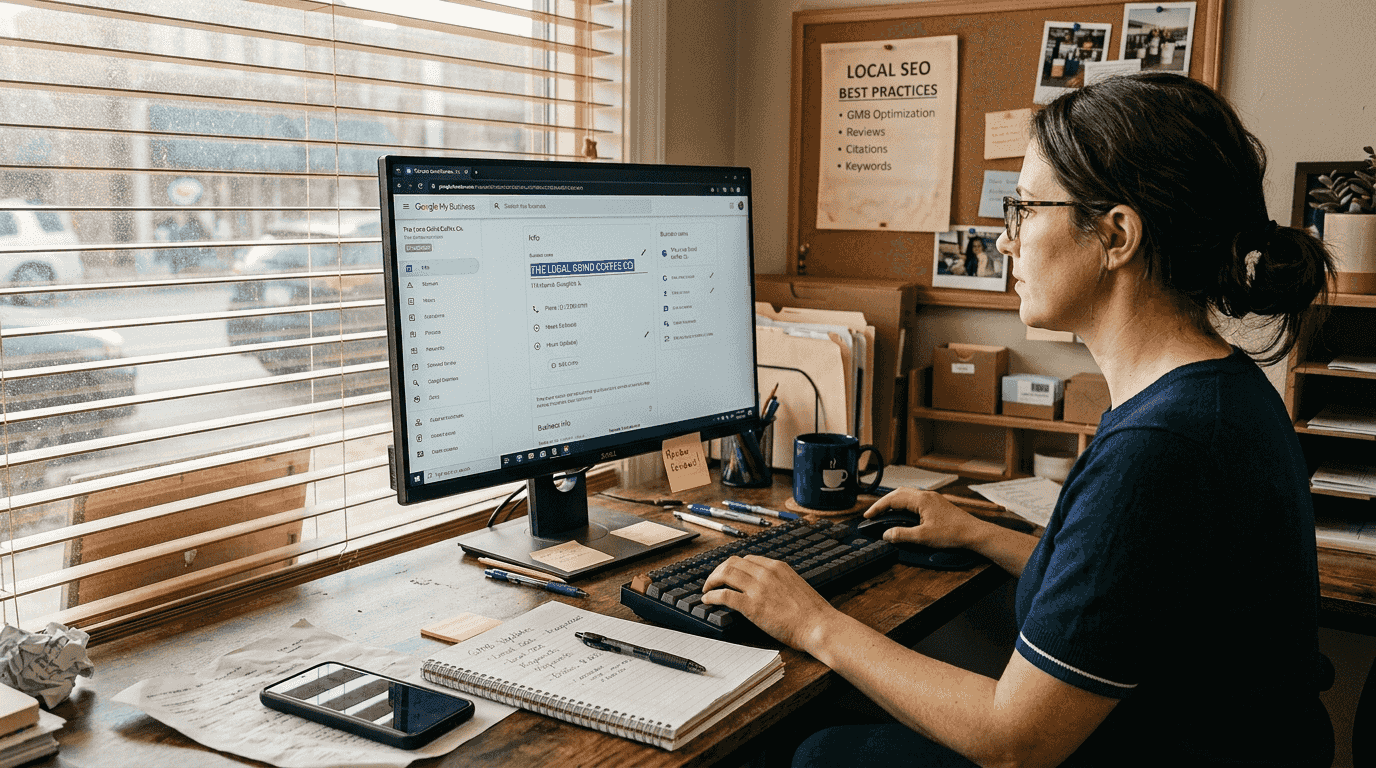
Complete every section of your Google My Business profile with accurate, detailed information. Include your exact business hours, phone number, website URL, and high-quality photos showcasing your location, products, and team. Businesses with complete profiles receive 50% more local pack appearances than competitors with incomplete listings.
Regularly update your GMB profile with fresh posts, offers, and seasonal information. Google rewards active profiles with higher visibility in local search results. Post weekly updates about new products, special promotions, or community involvement to signal ongoing relevance and engagement.
Hyper-local keywords lower your cost per lead while increasing conversion rates. Instead of targeting broad terms like "plumber," focus on specific phrases like "emergency plumber in downtown Portland" or "24-hour plumbing repair Pearl District." These longer-tail keywords face less competition and attract searchers with immediate purchase intent.
Local citations across directories and review platforms build authority signals that Google uses to validate your business legitimacy. Ensure your name, address, and phone number remain consistent across all platforms. Even minor variations like "Street" versus "St." can dilute your citation value and confuse search algorithms.
Positive reviews boost both trust and rankings in local search results. Encourage satisfied customers to share their experiences on Google, Yelp, and industry-specific platforms. Respond professionally to all reviews, including negative feedback, to demonstrate your commitment to customer satisfaction. Businesses with 50+ reviews see 35% higher click-through rates than those with fewer testimonials.
Pro Tip: Optimize your local listings by claiming profiles on niche directories specific to your industry. A restaurant should appear on OpenTable and Yelp, while a contractor needs HomeAdvisor and Angi listings.
Balancing paid ads and organic SEO for local businesses
Integrating pay-per-click advertising with organic SEO creates synergistic effects that dramatically improve lead generation and revenue growth. While each channel delivers value independently, combining them strategically produces 27% higher lead conversions compared to single-channel campaigns.
Paid ads deliver immediate visibility while your organic SEO efforts build momentum. Launch PPC campaigns targeting your highest-value keywords to capture traffic instantly, then reinvest profits into content creation and link building that strengthen organic rankings over time. This dual approach maintains consistent lead flow during the 3 to 6 month ramp-up period organic SEO requires.
AI-powered PPC tools enhance bid management and targeting efficiency by analyzing thousands of data points in real time. Platforms like Google Ads Smart Bidding automatically adjust bids based on device, location, time of day, and user behavior patterns. This optimization typically reduces cost per acquisition by 20 to 30% while maintaining or improving conversion volumes.
Paid social ads generate 20% higher engagement rates than traditional display advertising. Facebook and Instagram's sophisticated targeting capabilities let you reach users based on interests, behaviors, and life events that signal purchase readiness. A local gym can target users who recently moved to the area, follow fitness influencers, and have shown interest in health products.
| Channel | Average Cost | Best For | ROI Timeline |
|---|---|---|---|
| Google PPC | $1-$2 per click | Immediate leads | Days to weeks |
| Facebook Ads | $0.50-$1.50 per click | Brand awareness | Weeks to months |
| Organic SEO | $500-$2000/month | Sustainable growth | 3-6 months |
| Local SEO | $300-$1500/month | Geographic dominance | 2-4 months |
Pro Tip: Use PPC campaigns as a testing laboratory for your organic SEO strategy. Identify which keywords, ad copy, and landing pages convert best in paid campaigns, then optimize your organic content around those winning formulas.
Content marketing formats best suited for local engagement
Selecting the right content mix accelerates engagement and conversion rates by speaking to your local audience's consumption preferences. Different formats serve distinct purposes in your marketing funnel, from initial awareness through final purchase decision.
Video content drives 49% faster revenue growth for local businesses compared to text-based marketing alone. Short-form videos showcasing your products, customer testimonials, or behind-the-scenes glimpses build emotional connections that static images cannot match. A local bakery posting daily 30-second videos of fresh bread coming out of the oven creates sensory engagement that drives foot traffic.
Social media content enhances local brand awareness and fosters community connections. Platform algorithms prioritize local content, giving your posts higher organic reach among nearby users. Share user-generated content, highlight local partnerships, and participate in community conversations to position your brand as a neighborhood fixture rather than a faceless business.
Personalized and interactive content resonates with local interests and concerns. Create neighborhood-specific landing pages addressing unique pain points in different service areas. A roofing company might highlight hurricane preparation in coastal areas while emphasizing snow load capacity in mountain communities.
Using video and live interaction boosts conversion rates by enabling real-time engagement. Facebook Live sessions, Instagram Stories Q&As, and YouTube tutorials let potential customers experience your expertise and personality before making purchase decisions. Live video generates 6x more engagement than pre-recorded content.
- Customer testimonial videos showcasing local clients build trust through recognizable faces and locations
- Educational content addressing seasonal local concerns positions you as the go-to expert
- Interactive polls and quizzes increase engagement while gathering valuable audience insights
- Virtual tours of your location reduce hesitation for first-time visitors
Auto-suggest and AI recommendation optimization
Optimizing for search auto-suggest and AI-driven recommendations represents a cutting-edge opportunity to capture high-intent local traffic before competitors even appear in results. These features shape search behavior by guiding users toward specific queries, making early positioning crucial.
Auto-suggest optimization increases impressions by 35% and local mobile traffic by up to 25%. When your business name or category appears in auto-suggest dropdowns, you benefit from implied endorsement and increased click-through rates. Users trust suggestions as validated options rather than random search results.
Voice search optimization becomes critical as smart speakers and voice assistants dominate local queries. Nearly 60% of local searches now occur through voice commands, requiring content optimization for natural language patterns. Instead of targeting "Italian restaurant downtown," optimize for "where can I find authentic Italian food near me tonight."
Techniques for capturing these opportunities include structuring content around question-based keywords and conversational phrases. Create FAQ pages addressing common local queries using natural language. Implement schema markup highlighting your business type, location, hours, and services to help AI systems understand and recommend your offerings.
Capturing AI-driven recommendations enhances visibility on emerging local search features like Google's
Recommended
- Social Media vs. Google: Where Should Local Businesses Focus Their Efforts?
- Top 10 Digital Marketing Mistakes Small Businesses Make (And How to Fix Them)
- How to Win at AI Marketing & Local SEO in 2026
- Digital Marketing Glossary | Marketing Terms & ROI Definitions
- Social Media Marketing: non solo Facebook Ads | The Rope